Sogak, Sinsa: Chinese comfort food behind Garosu-gil
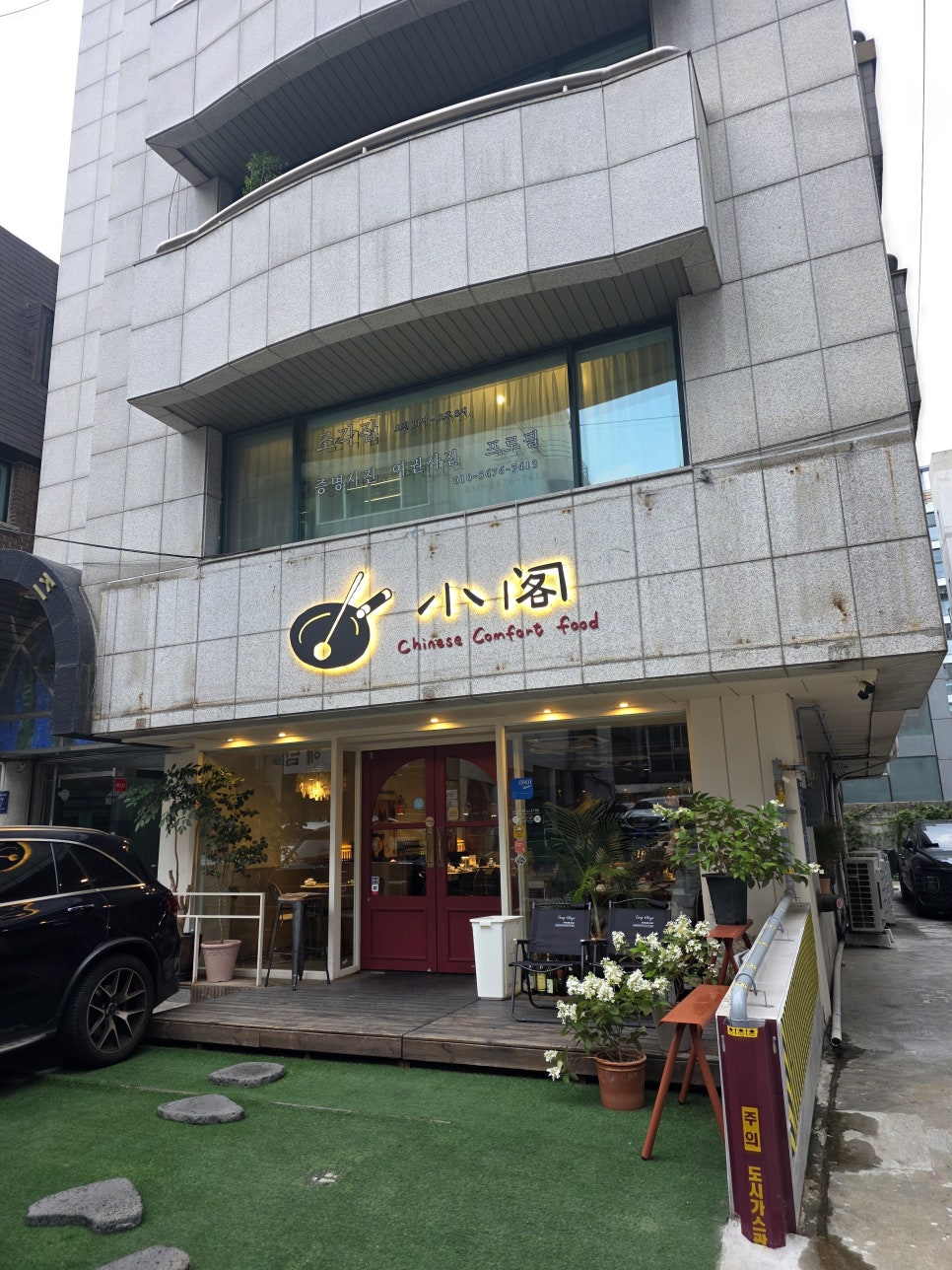
Dinner in Sinsa on a weeknight with a colleague you have not seen in a while has a familiar problem. An izakaya is too much about drinking, pasta is a bit ordinary, and a proper Chinese restaurant with a round table and big shared dishes is more than two or three people can handle.
Chinese food is often the answer anyway, as long as it has some sense of occasion without a heavy bill. I had Song Chef and Cheon Mimi on the list, but both are formal in the old style, and for a catch-up that felt a little middle-aged. Then, walking from the bus stop one stop down from Sinsa station, I noticed a sign shaped like a yellow frying pan.
Before you go
| Item | Notes |
|---|---|
| Booking | Reservations are listed on Naver and Catchtable. Book if you want the round window table in the evening |
| Corkage | Yes. As listed when we went: ₩15,000 a bottle for wine or sake under 25 percent, ₩25,000 for whisky, baijiu and other strong spirits |
| Getting there | Sinsa station exit 6, five to ten minutes on foot, or a walk down Garosu-gil and one street over. Valet parking sign outside; in the evening the bus and your feet are faster than a car |
| Korean name | 소각 |
A yellow frying pan and a Spanish door
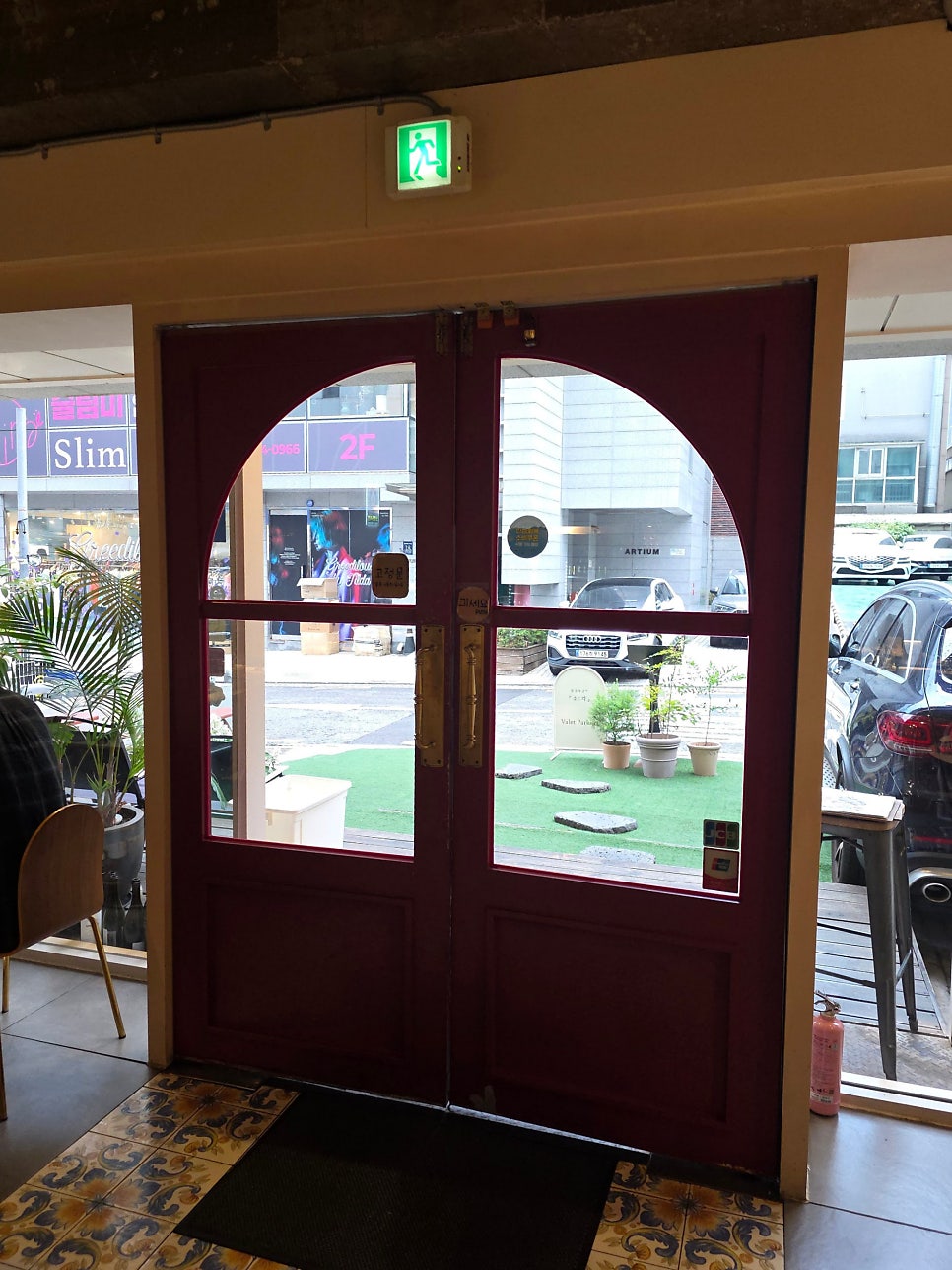
I like the approach from exit 6, down the main Garosu-gil past the new flagship stores and pop-ups, then one block over into Serosu-gil, where the tone drops to older low buildings and small shops and the crowd thins out. Sogak is a little way into that quieter street, right where a short walk naturally ends.
There are a few folding director’s chairs and plants outside, more of a waiting spot than a terrace, though on an early summer evening I would happily sit there. The sign reads 小 阁 Chinese Comfort Food. Small pavilion, roughly. The name already tells you this is not going to be the formal kind of Chinese restaurant.
The door is wine-red wood with two arched panes of glass, and the wall beside it is tiled in Spanish blue and yellow. A Chinese restaurant with the entrance of a southern European bistro. You stop and wonder what is inside.
Nothing red, nothing gilded
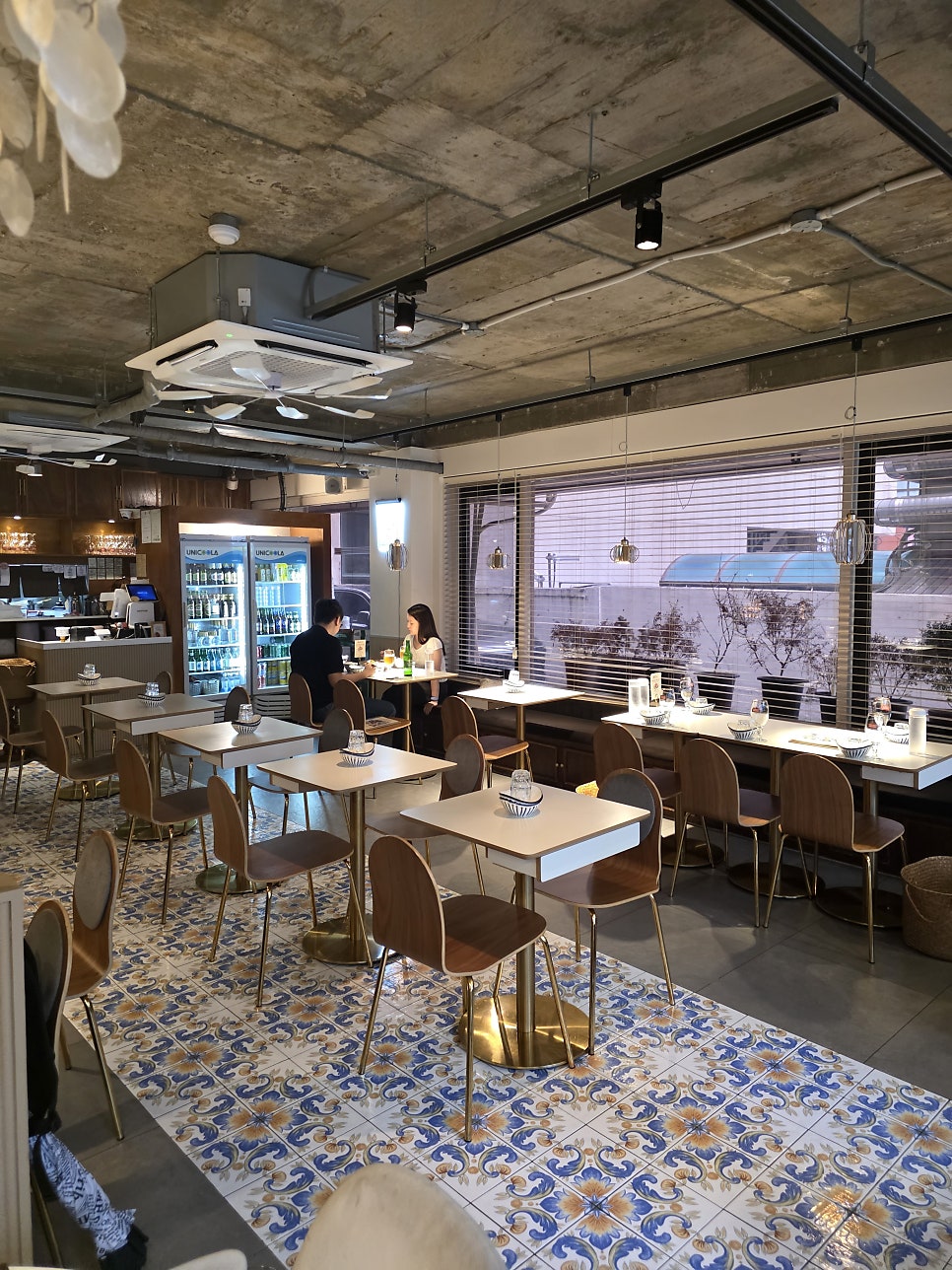
Inside: exposed concrete ceiling, an open kitchen behind wooden cabinets, and Moroccan blue-and-white tiles on the floor. None of the red lacquer or calligraphy you expect. It reads like a modern cafe, and the finishing is thorough rather than merely on trend. Line pendants hang over the tables, and after dark one wall goes faintly orange.
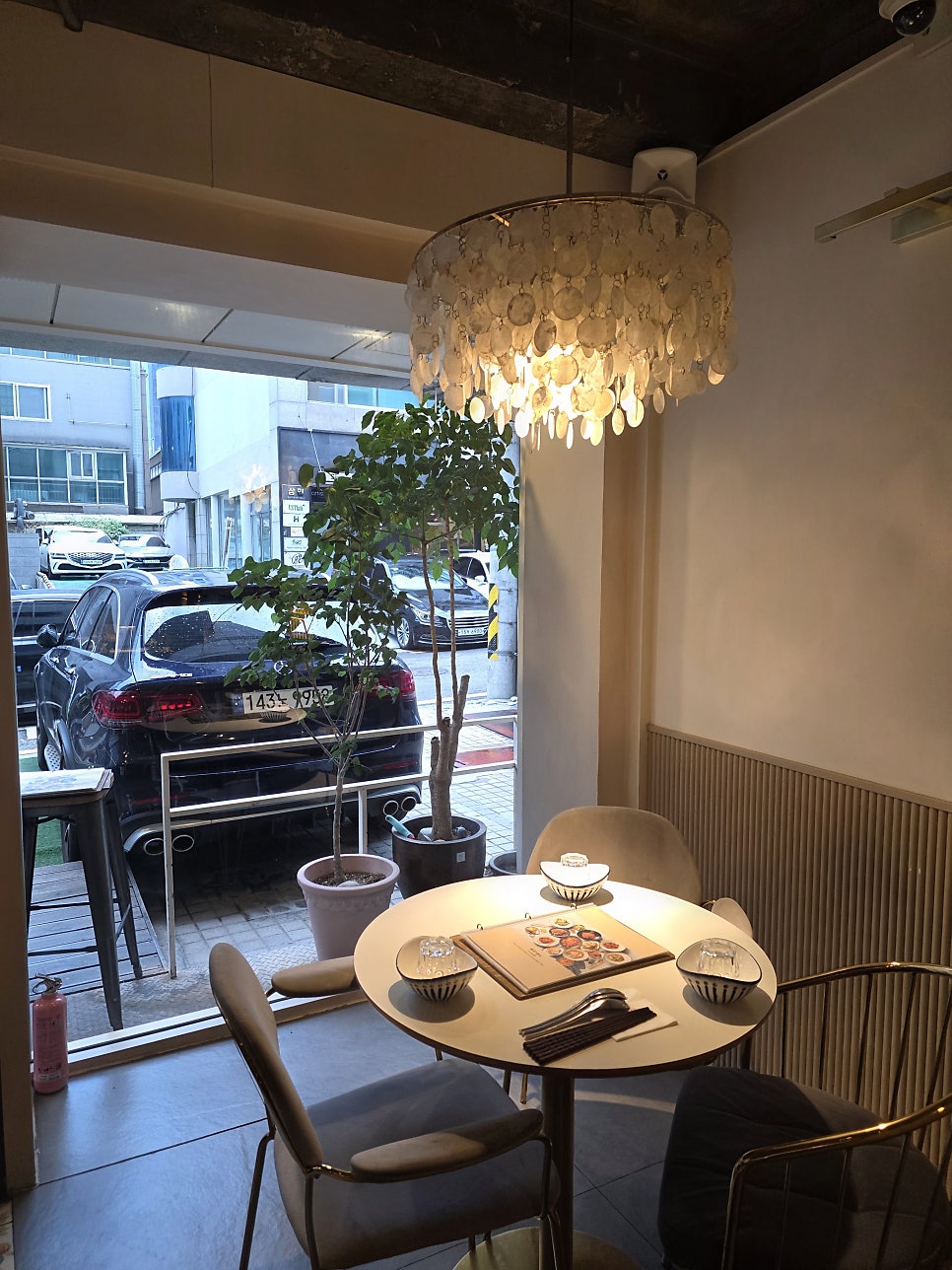
The round wooden table by the window, with off-white chairs and a large chandelier made of tiny shells above it, is the seat that turns into a photo the moment you sit down. It is the date table, and I suspect it is the one people fight over. We arrived around twenty to seven and had our pick; by seven the window seats were going.
At the next table, a group of six or seven had brought several bottles of wine. That was how I learned about the corkage. Rattan baskets sit beside each table for bags and coats, a small detail I associate with Japanese izakayas and rarely see in a Chinese restaurant here.
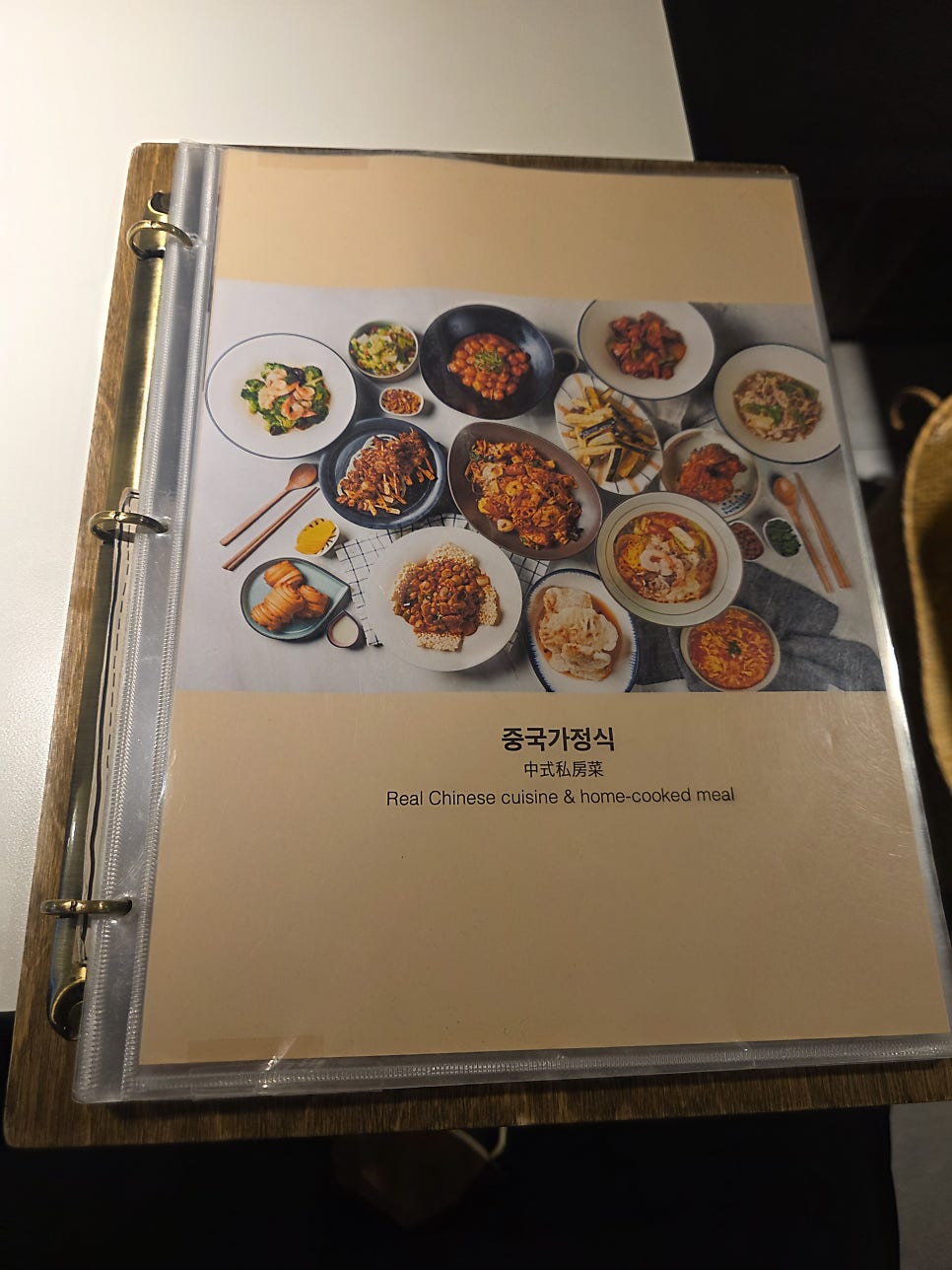
The standing menu by the door has a wooden cover with gold hinges and a spread of more than ten dish photos. A menu with some physical weight to it shapes a first impression more than people think. Inside it says the owner is Chinese, has lived in Korea since coming as a student in 2008, and started cooking vegetables in different ways because her daughter refused to eat them. That line stayed with me.
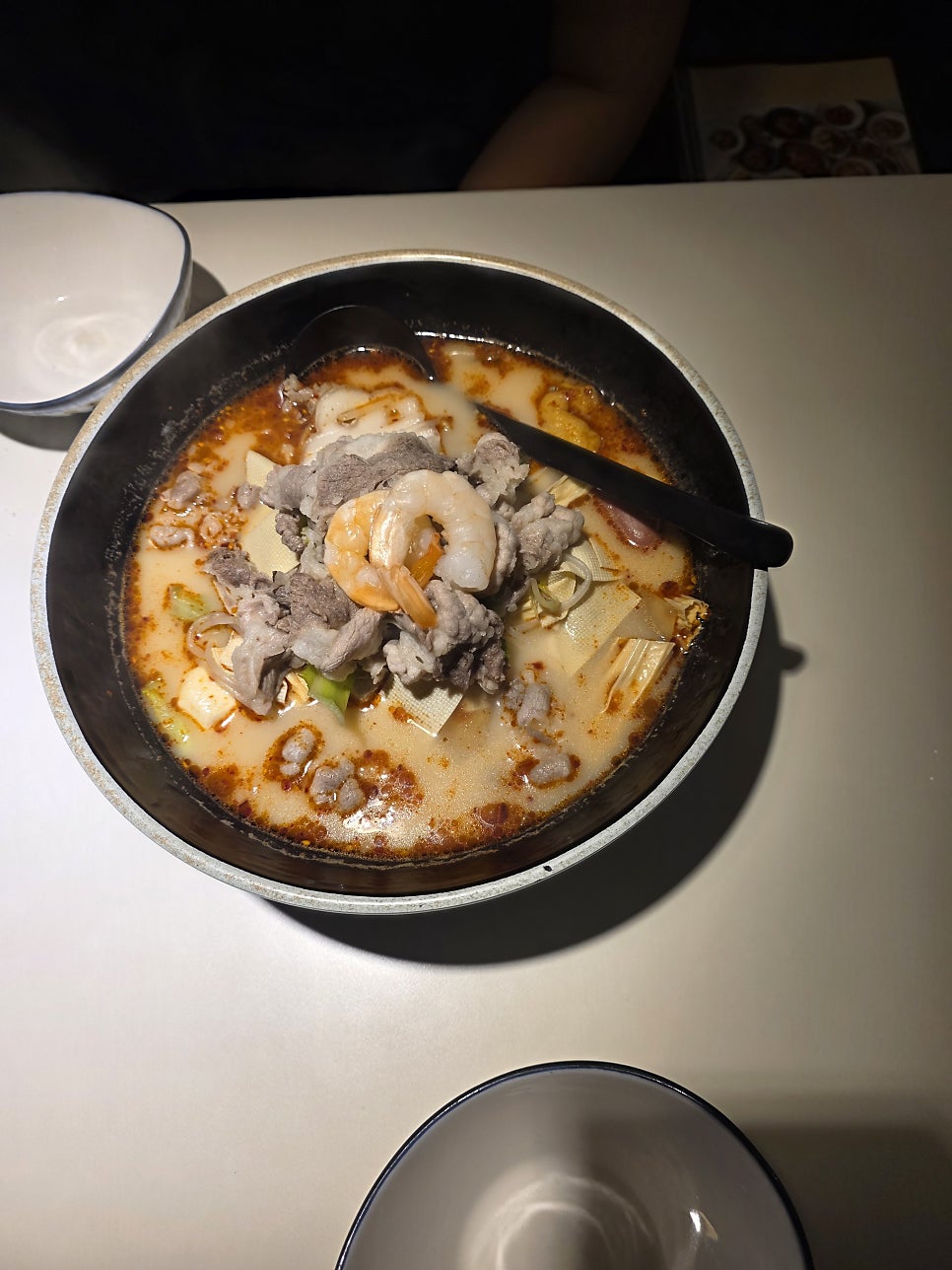
The menu runs malatang, mala xiangguo, fried eggplant, smashed cucumber, lamb, guobaorou. It took me a moment to realise I was, technically, in a malatang restaurant. We ordered the fried eggplant and the malatang.
The eggplant
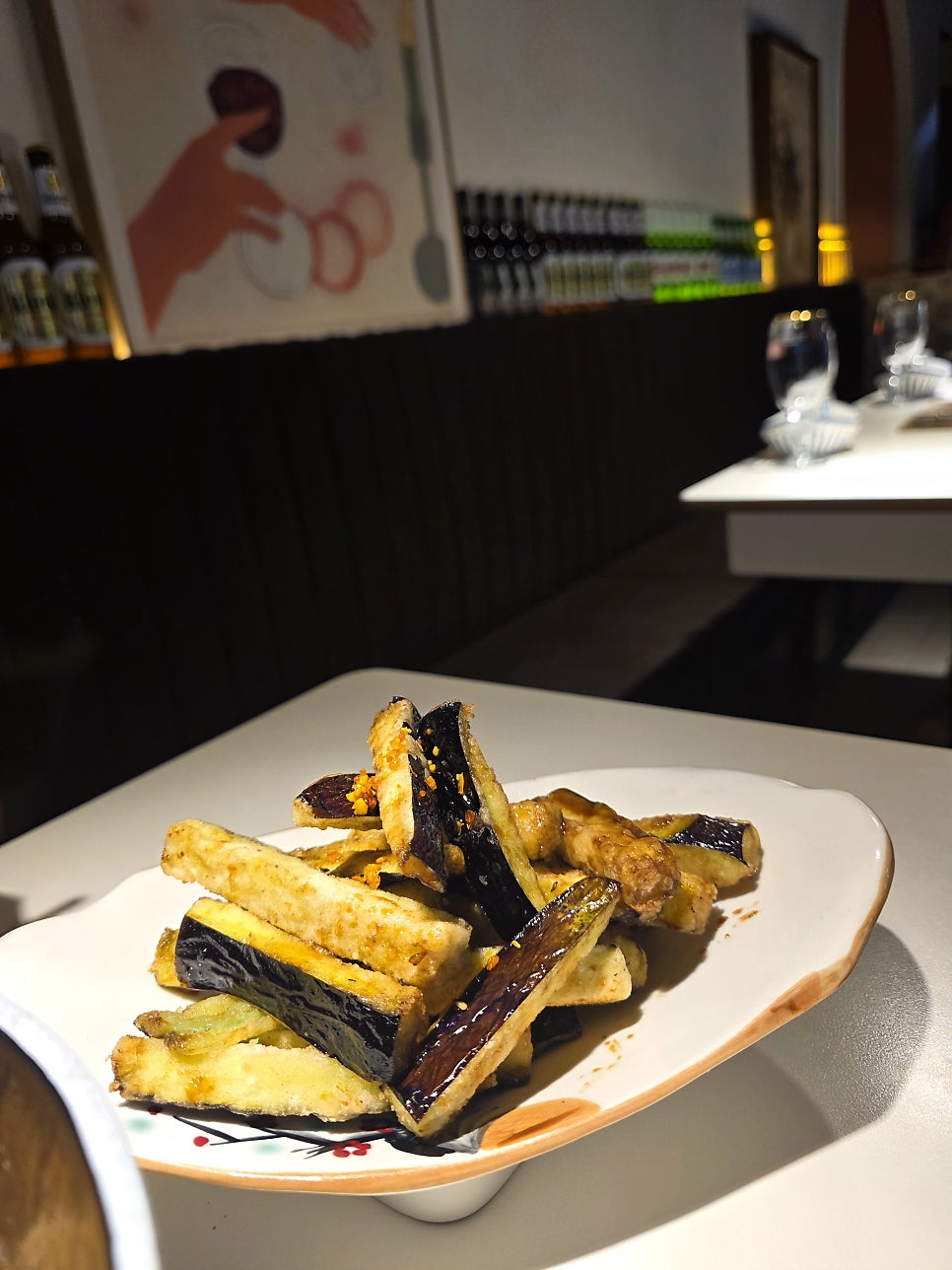
The eggplant came first and the first thing I noticed was that it was not oily. Fried, but without the heaviness of fried food, and not so soft that it collapsed. The outside had just enough bite, and the aroma coming up from the eggplant inside was the kind you only get from good eggplant. The softer flavour arrived a beat later, then a little sauce at the end. That balance in a single fried dish is not common. We were catching up and my hand kept drifting back to the plate.
The malatang was not what I expected either. Not the deep red, chili-forward bowl from the franchise places. The broth was nearly cream-coloured and the mala numbing came in quietly at the end. Ingredients first, heat later. Shrimp, beef, tofu, bamboo shoots and bean sprouts, none of it piled on. The same word I had used for the room, tidy, turned out to fit the soup.
It reminded me of the mala xiangguo at Lalaguan in Itaewon, which also puts the ingredients ahead of the burn. A few places are moving the category in this direction. Sogak goes a step further and matches the room to the broth.
For a long conversation with someone you have not seen in a while, this is the right level of spice. The food does not interrupt the talk. That is the restaurant’s real strength.
I’d recommend it to colleagues and old friends in their thirties and forties meeting for dinner in Sinsa, to anyone hosting someone important who wants modern and tidy rather than formal and heavy, and to people who prefer to arrive by subway. It is not built for a loud, crowded work dinner, and that seems to be the point. Next time I want the mala xiangguo, the guobaorou and the smashed cucumber, a window table at seven, and a bottle of something Chinese to go with each dish. I would also like to bring a friend from abroad, because this is a good place to show how Chinese food in Korea is changing.
My rating: 5/5. Firmly on my Sinsa dinner list.