Sakaba Torinyang, Mullae: sake in a former workshop
I keep coming back to Mullae for the way its small workshops, cafes and bars sit beside one another. The neighborhood has changed a lot over the years I have been visiting, but the older buildings still shape the walk through it. Sometimes I am looking for a particular place. Sometimes I just want to see what has appeared along a familiar alley.
Sakaba Torinyang was a place I had heard about before I managed to visit. A friend and I came for dinner and sake, and getting the reservation turned out to require more coordination than finding the door.
Before you go
| Item | Notes |
|---|---|
| Booking | Catchtable app only. Same-day seats open at 11:00 Korean time, in three sessions, and go within the minute. Walk-ins are difficult |
| Drinks rule | One 720ml bottle for two people, two bottles for three. Corkage is possible with a per-bottle fee |
| Prices we saw | Suigei roughly ₩50,000 to 60,000 a bottle, Wakanami in the low ₩100,000s. The seasonal course is priced separately |
| Getting there | Walking distance from Mullae station (Line 2). No parking; use a paid lot near the station |
| Korean name | 사카바 토리냥 |
Start with the reservation
When we booked, same-day reservations opened on Catchtable at 11am, with three seating sessions. I missed my chance. Fortunately, my friend got through, which is how we ended up at the counter that evening.
I would arrange the reservation before building a night in Mullae around this bar. Knowing the bottle rule in advance also helps you decide whether this is the sort of evening you want.
Look for the old workshop sign
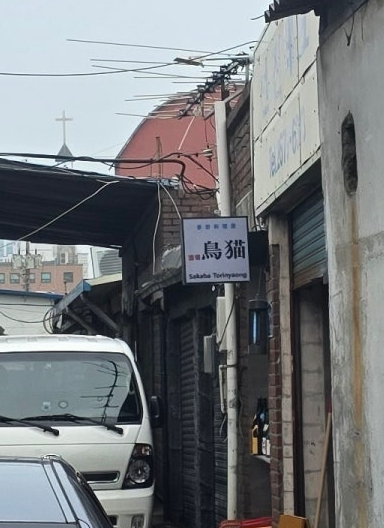
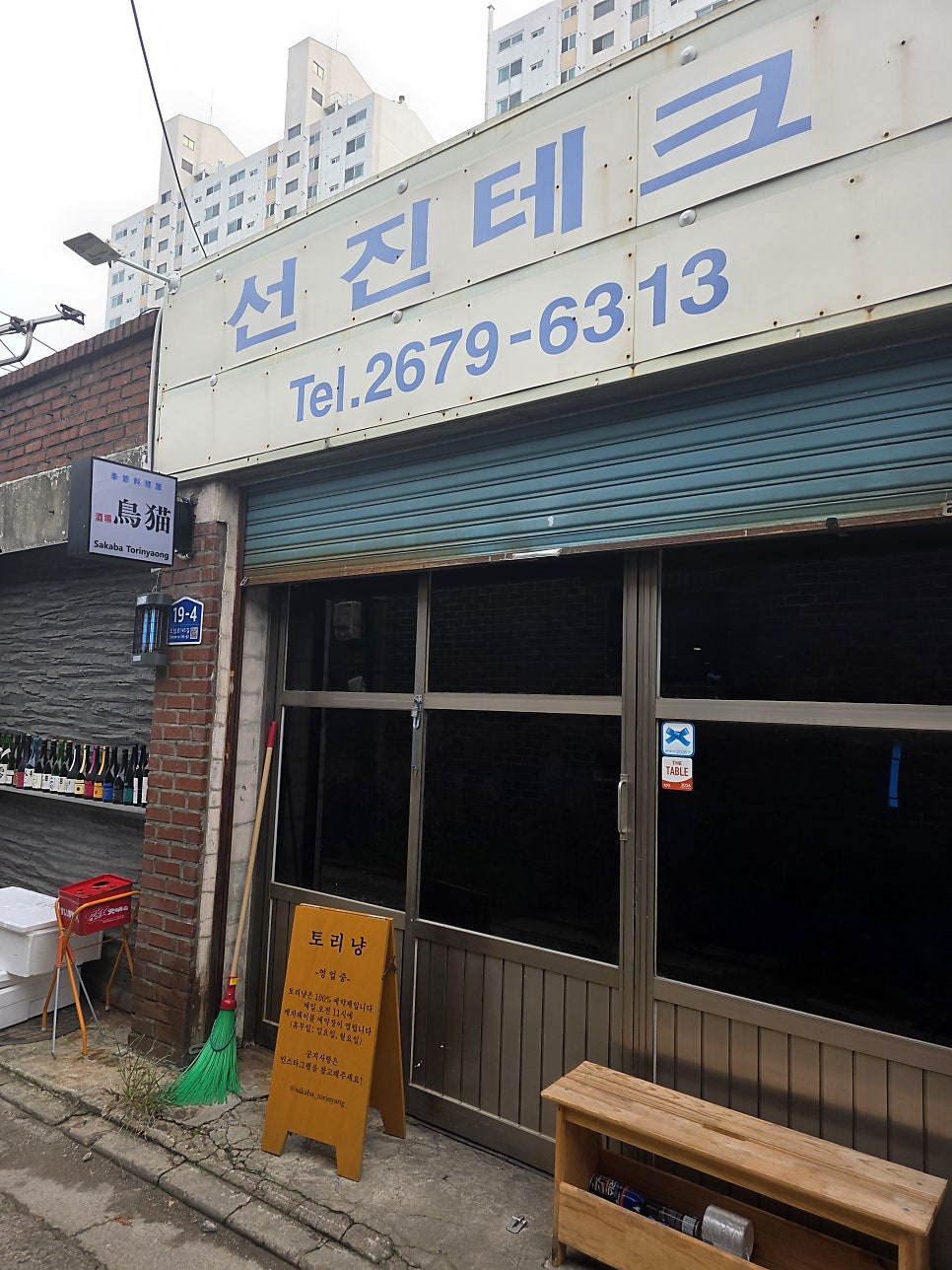
The biggest sign outside says 선진테크, or Seonjin Tech. It is a trace of the building’s previous use, and it is much more obvious than the bar’s own name. Look for the smaller Torinyang sign near the entrance and the glass door in a metal frame.
That first impression is part of what I like about going out in Mullae. You arrive through a street of workshops and older buildings, then step into a room arranged around an entirely different kind of work.
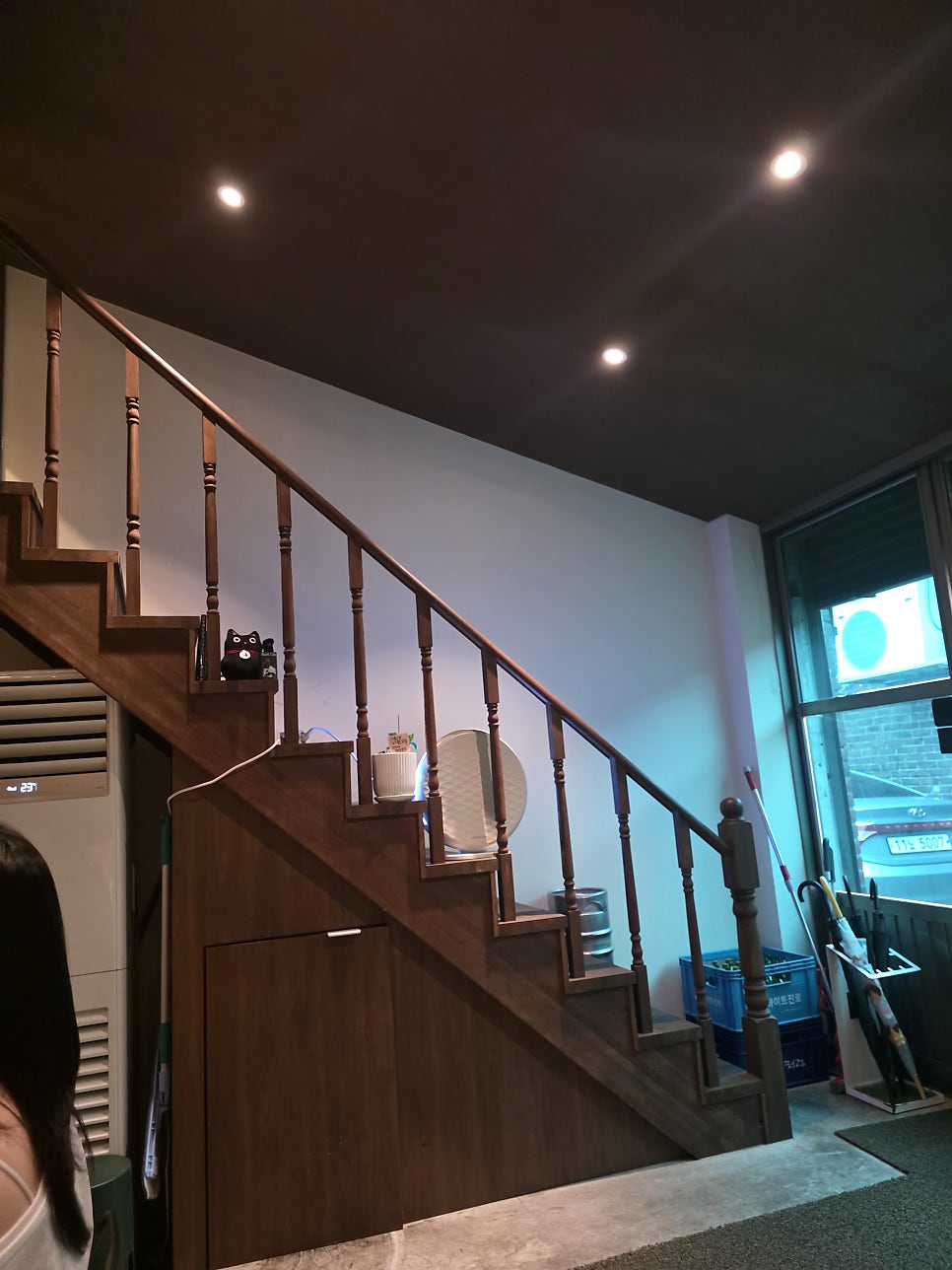
Inside, the counter faces an open kitchen. Behind it, rows of sake bottles caught my eye almost immediately. There were labels I recognized from drinking in Japan, and I spent the first few minutes studying the selection before paying much attention to anything else.
The view of the kitchen and the bottles reminded me of counters I have sat at on trips to Japan. Yet the walk through Mullae was still fresh in my mind. I liked having both in the same evening.
Letting the food set the pace
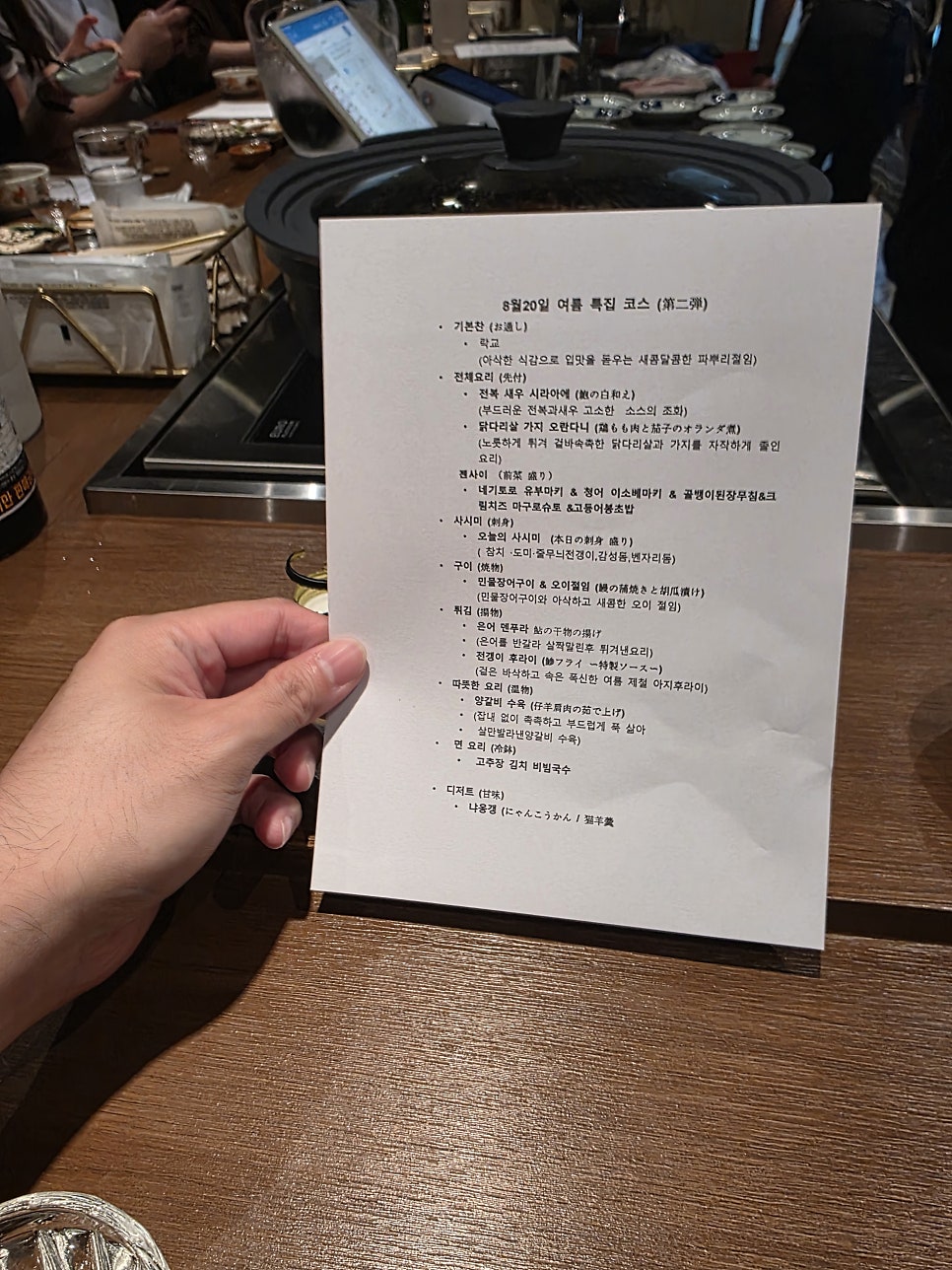
There was a printed summer-course menu at our seats. I always enjoy a detail like that. It gives you something to look forward to and something to return to as the dishes arrive.
We began with abalone and shrimp in a gentle white dressing, served in a floral bowl. The shrimp’s sweetness came through without the sauce feeling heavy, and it worked well with the sake we had chosen. A chicken and eggplant dish followed, portioned into bites that made it natural to eat a little, have a sip and keep talking.
One of the plates brought together several small preparations, including fish, a roll and cream cheese with a savory accompaniment. I enjoyed moving between the different textures and flavors. It made me think about how carefully the chef had considered the order in which someone sitting at the counter might eat.
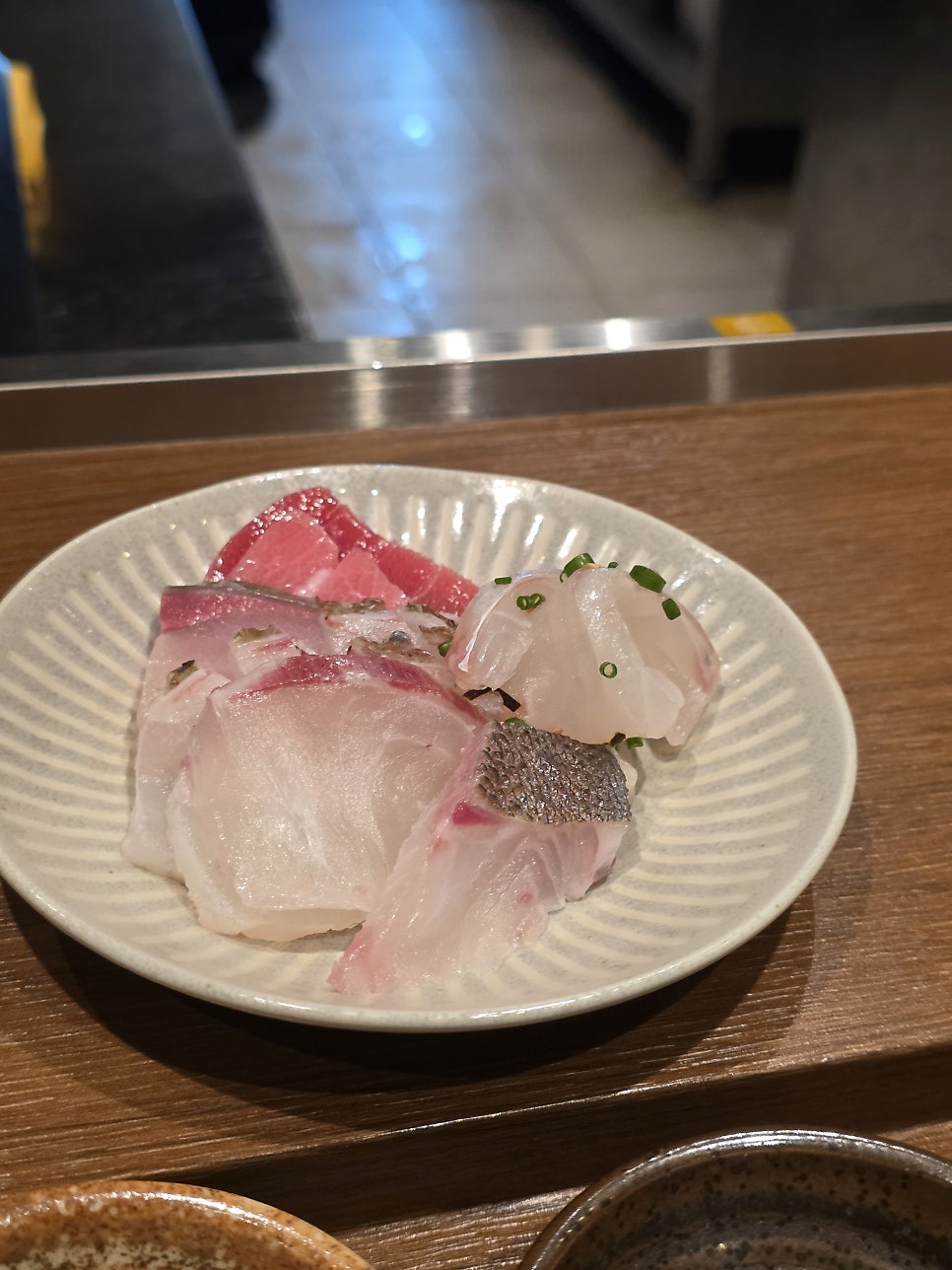
There was sashimi, then grilled eel with pickled cucumber. The eel was soft with a little crispness at the skin, and the cucumber was a refreshing contrast. Later came fried fish and tender lamb, followed by spicy noodles towards the end of the meal.
Rather than remembering the evening as a list of dishes, I remember its pace. There was always another small change in temperature, texture or flavor, and time between them to talk and choose another drink.
The final sweet was a small piece of yanggaeng, a firm jelly-like confection. I could not quite decide what flavor I was picking up, and I did not ask. I mainly remember wishing the piece were a little bigger.
Finding a second bottle
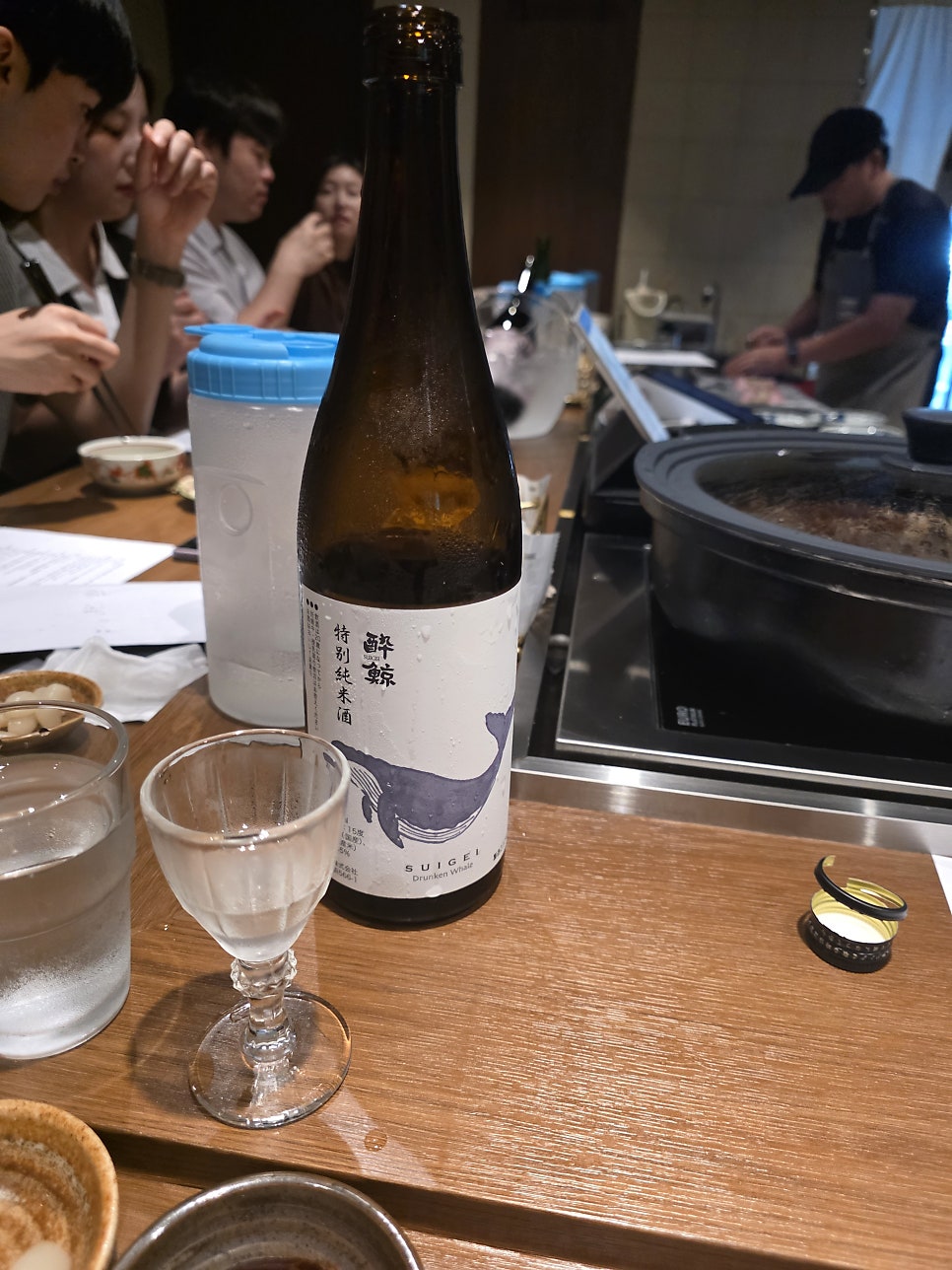
We started with Suigei Tokubetsu Junmai. It tasted clean to me, with a finish that lingered gently, and I enjoyed it alongside the first dishes.
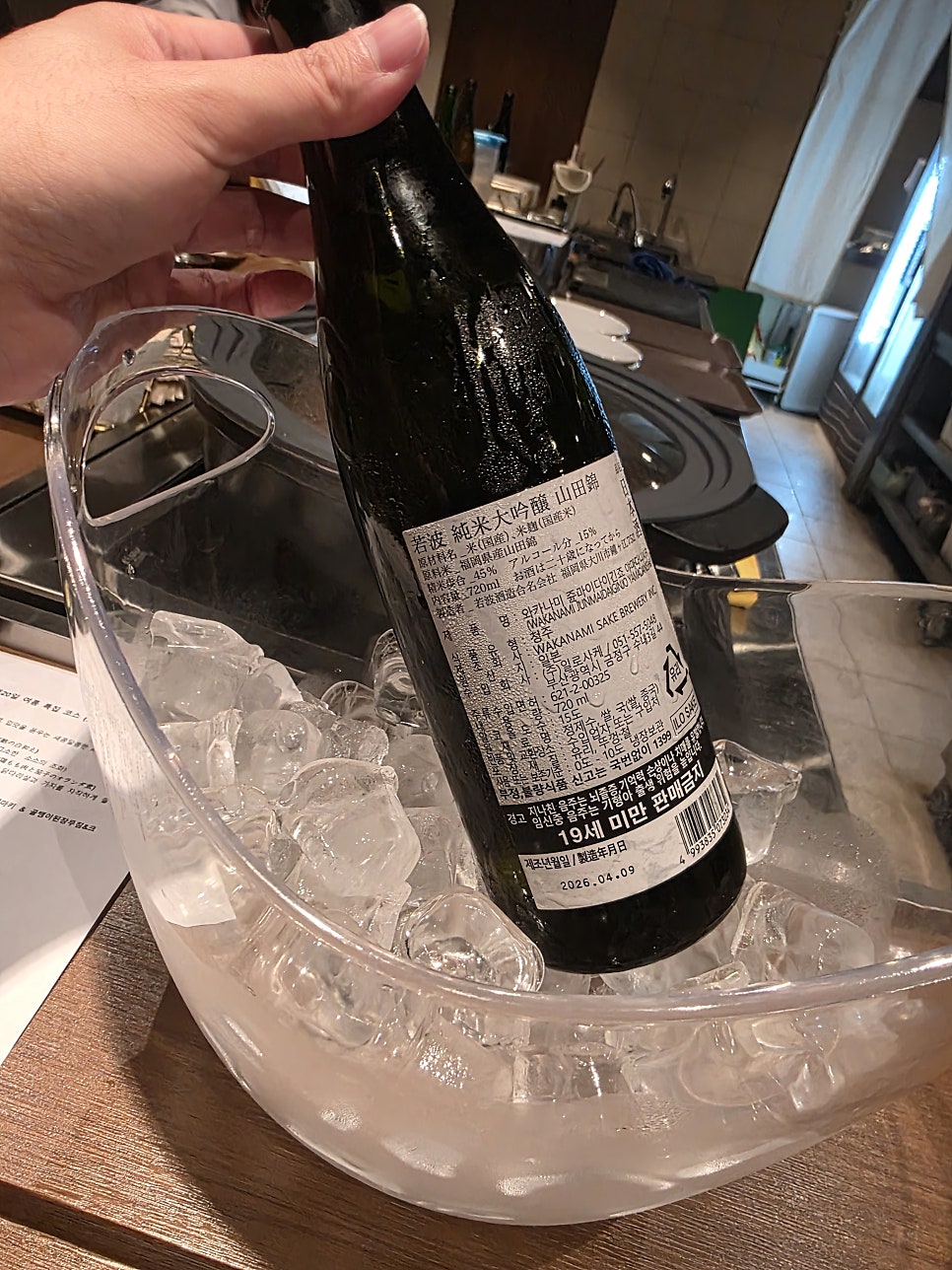
For the second bottle, the sake I had hoped to try was no longer available. I asked the chef for something a little sweet with a touch of fizz, and he suggested Wakanami. That recommendation became one of my favorite parts of the evening. It had the sort of lightness I was looking for, and I liked it enough to want to look for it on a future trip to Japan.
I am still learning about sake, so being able to describe what I wanted without needing to know the whole list made the conversation comfortable. If you are choosing a bottle, it helps to mention your budget, whether you prefer something dry or sweet, and whether you enjoy a little effervescence. That gives the person recommending something useful to work with.
We were not quite ready to finish
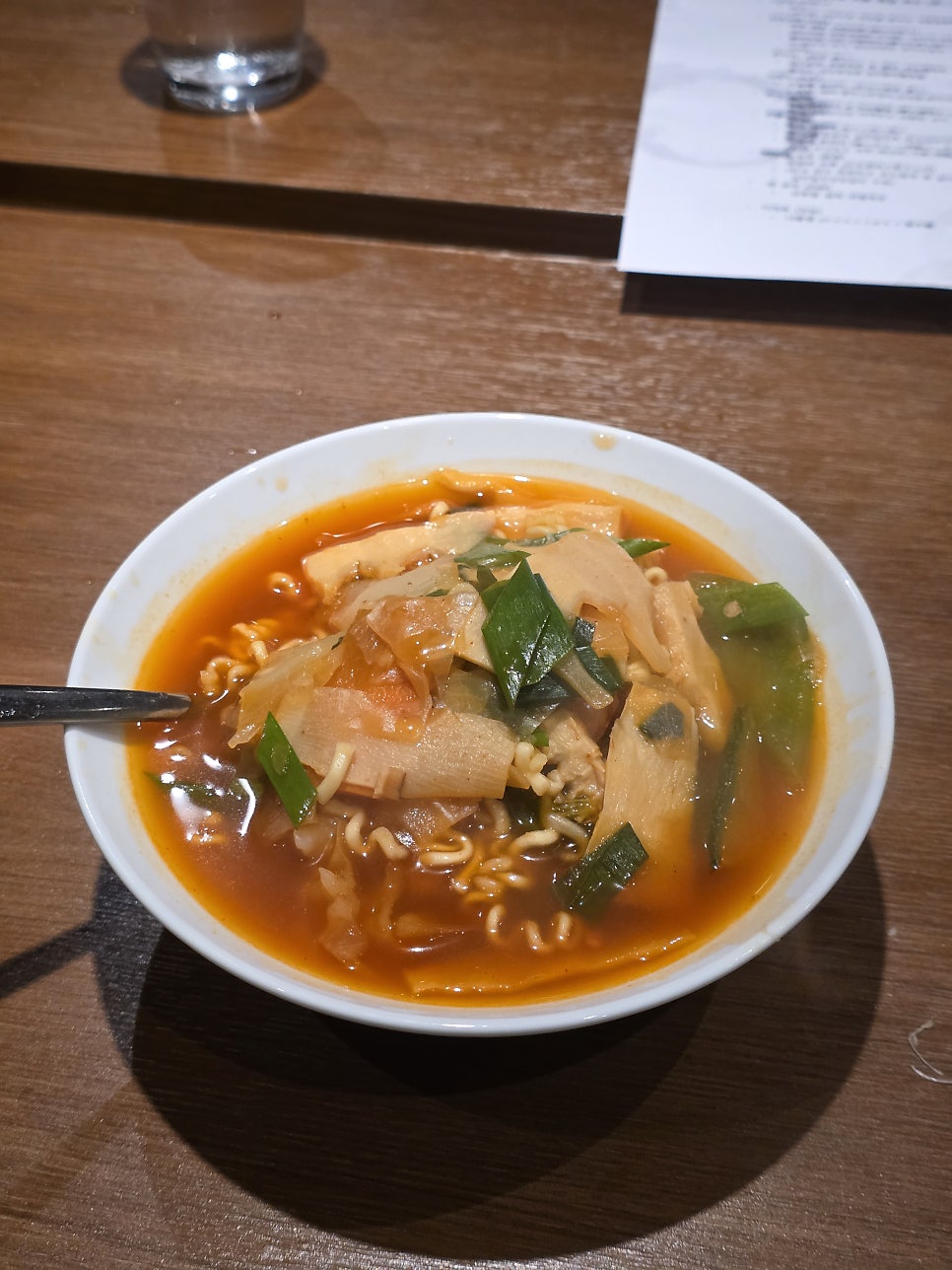
After the course, my friend mentioned that we could ask for Yeol Ramyeon, a spicy Korean instant noodle soup. We ordered two. They arrived with bamboo shoots and spring onion, and the hot broth was a very satisfying way to end the meal after the sake.
It is worth asking whether it is available if you still have room. For us, it extended an evening we were already enjoying.
I’d recommend it to anyone who wants to learn sake at a counter rather than from a list, and to two or three friends who are happy to split bottles. Next time I’ll try the Zaku I missed, and order the ramyeon without waiting to be told. I also look forward to that short walk before dinner: the workshop signs, the narrow street and the moment of checking that the unlikely-looking entrance really is the right one.
My rating: 5/5. I am already planning the return.