Samdae Samgyejangin, Gyodae: pine nut samgyetang
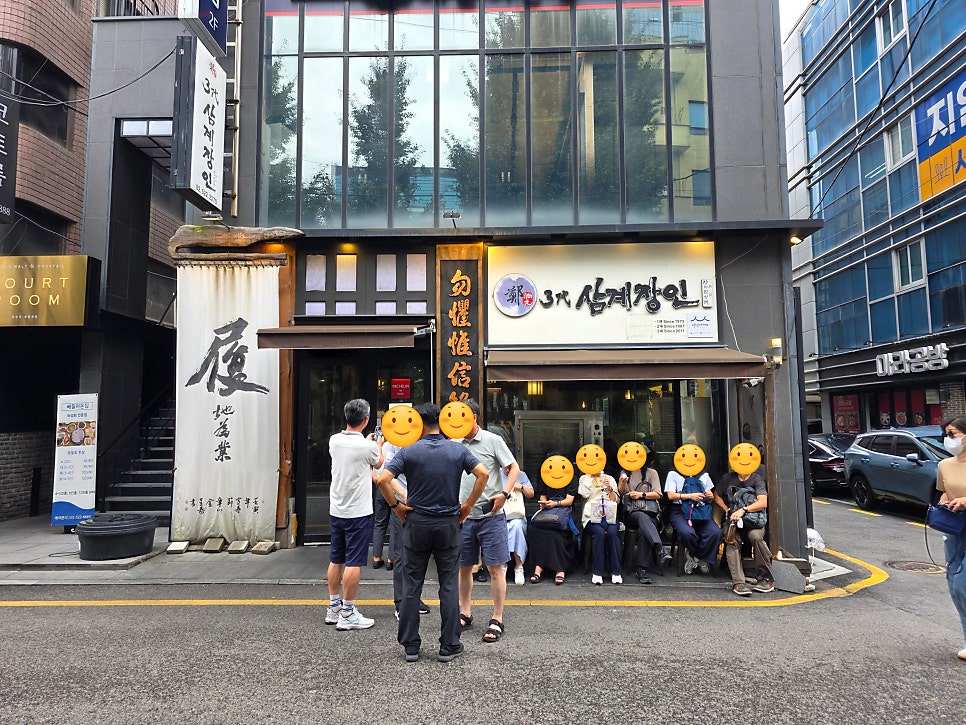
Where do you go for samgyetang? For years my answer was Hosu Samgyetang. I like the thick, almost creamy style of broth, and Hosu had a huge basement branch in Dogok that did it exactly right. Then that branch closed, and I spent a long time without a replacement. I went to the Yeongdeungpo original now and then, but I wanted somewhere in Gangnam I could call mine.
That is how I came to Samdae Samgyejangin, a place I had been avoiding on principle. It has been run by three generations since 1973 and it is on the Michelin Bib Gourmand list (where it appears as 3rd Samgyetang), which usually means crowds and, sometimes, a kitchen that loses its grip after the cameras leave. I tend to skip restaurants that have been on television. A chef I respect, Lee Won-il, had eaten here, so I made an exception.
My wife and I went on a hot Saturday at midday, partly for lunch and partly for the old Korean idea that a bowl of chicken soup is what you eat when the heat is wearing you down.
Before you go
| Item | Notes |
|---|---|
| Prices we saw | Pine nut, mung bean or mugwort samgyetang, each ₩19,500. A sous-vide dakbokkeumtang for two or three at ₩40,000, limited daily |
| Waiting | We did not book; we waited on the bench outside, which seats about ten. We had five groups ahead of us and did not wait long; the room is big and turns over fast |
| Parking | Hanseong parking lot, three minutes on foot. One hour free if you eat here. I asked the attendant and he confirmed it |
| Getting there | Gyodae station exit 14, about five minutes on foot, then into the side street off the main crossing |
| Korean name | 3대 삼계장인 |
A hanok inside a glass box
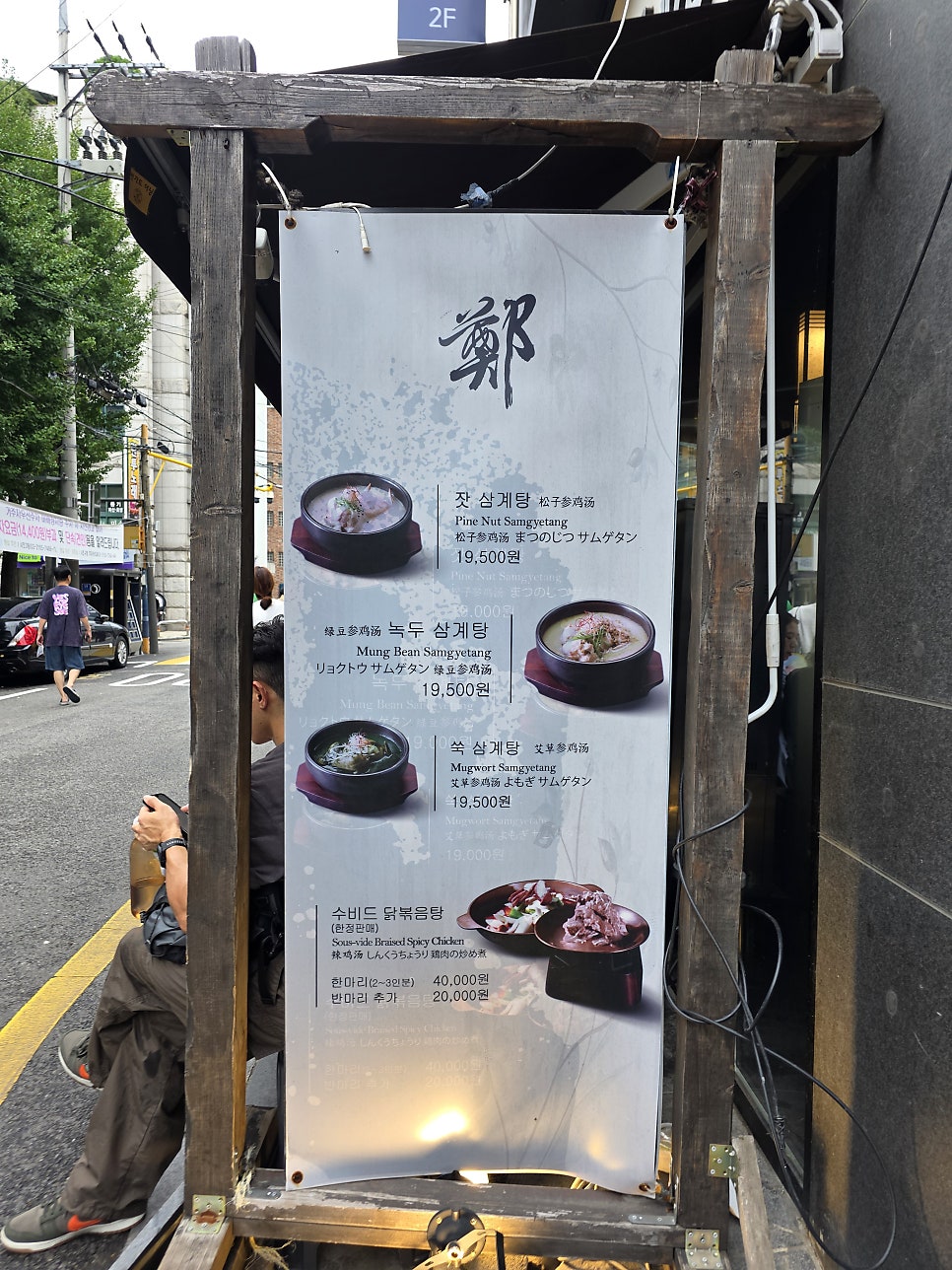
From the crossing at Gyodae you turn into a smaller street and find a glass-fronted restaurant with a black wall, a white noren curtain and the name in yellow. A standing menu board sits outside, which is a smart way to keep hungry people from wandering off. It worked on us.
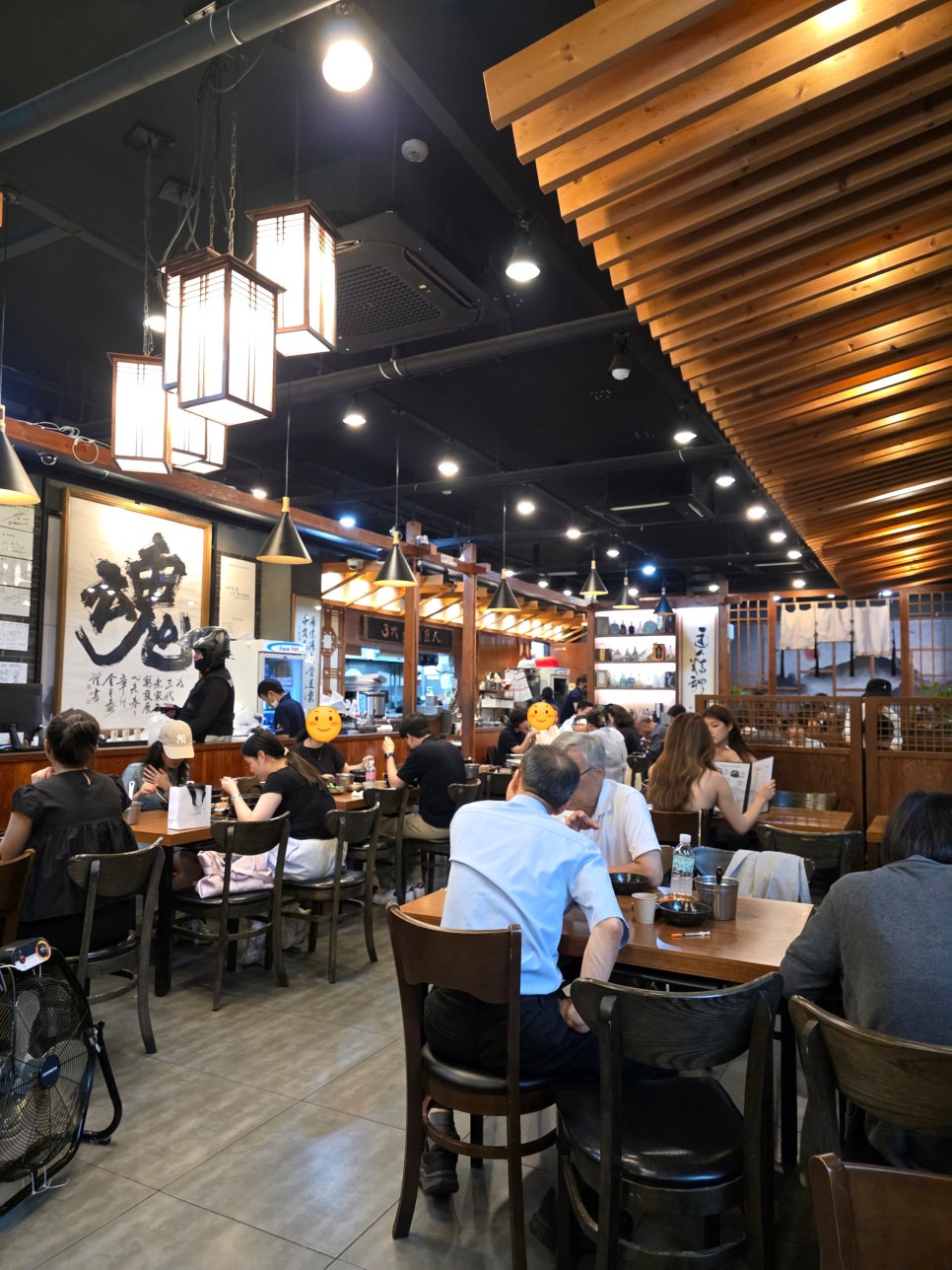
By the door is a wooden nameplate and a row of plaques: a national heritage restaurant designation, a master craftsman certificate, the Michelin stickers. Inside, the room is done like a hanok, with exposed wooden beams and square hanji lamps, but with big windows so it feels open. Tables face several directions and the space is wide, which is why the queue moves. More than half the tables around us were foreigners, and the room had the cheerful noise of a place that is busy for good reasons.
We were given a window table, which I was quietly pleased about.
The pine nut version
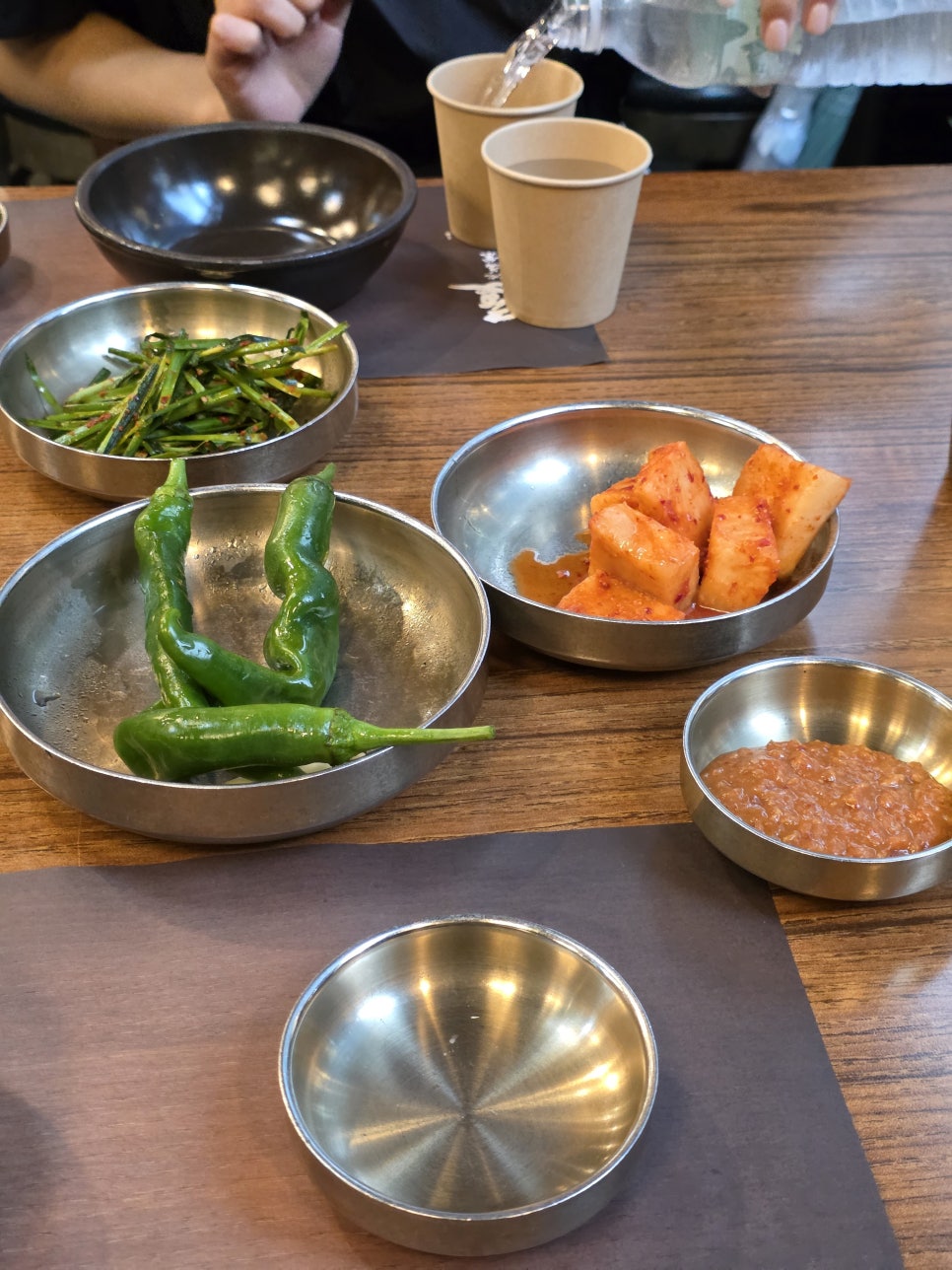
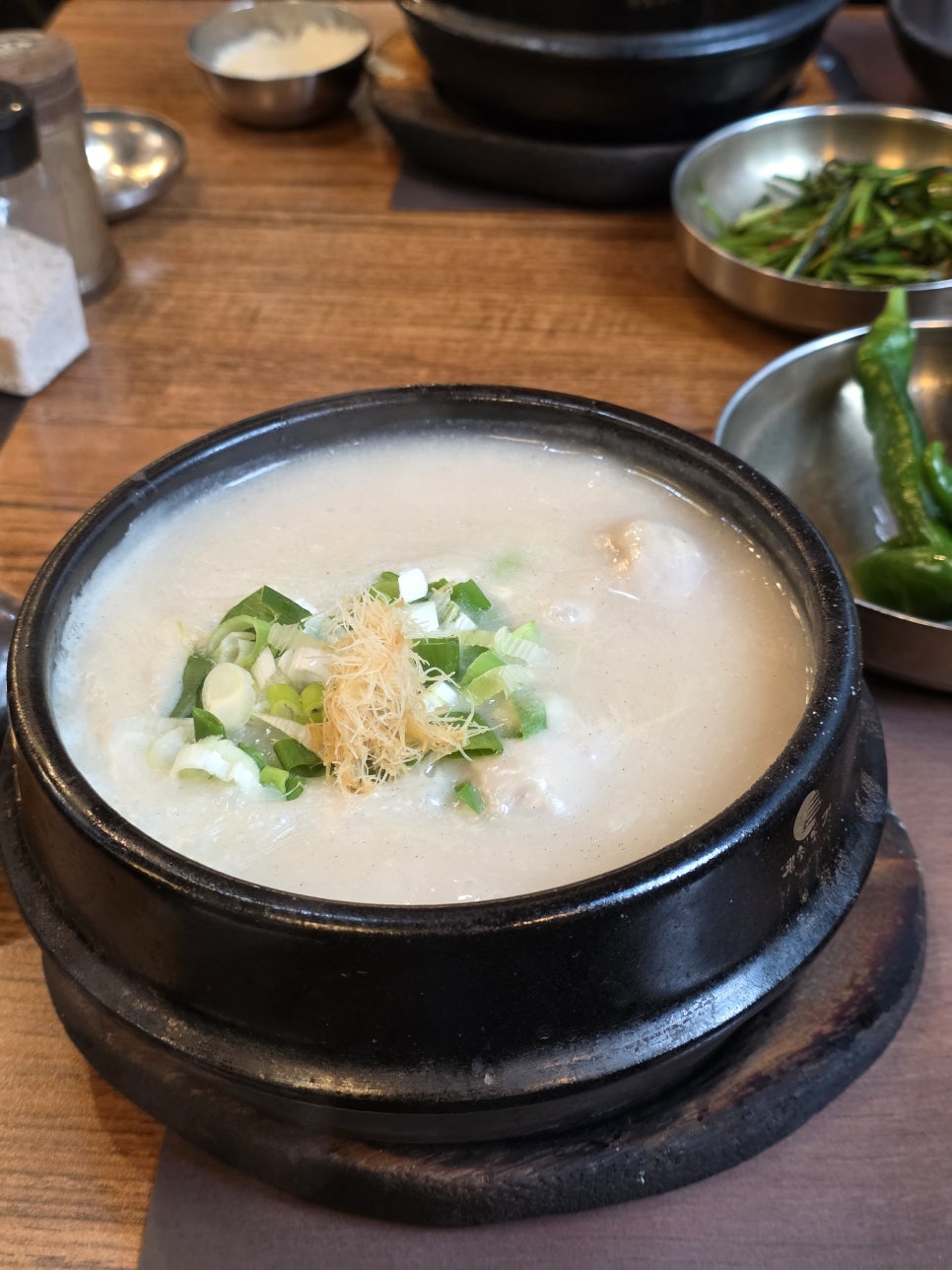
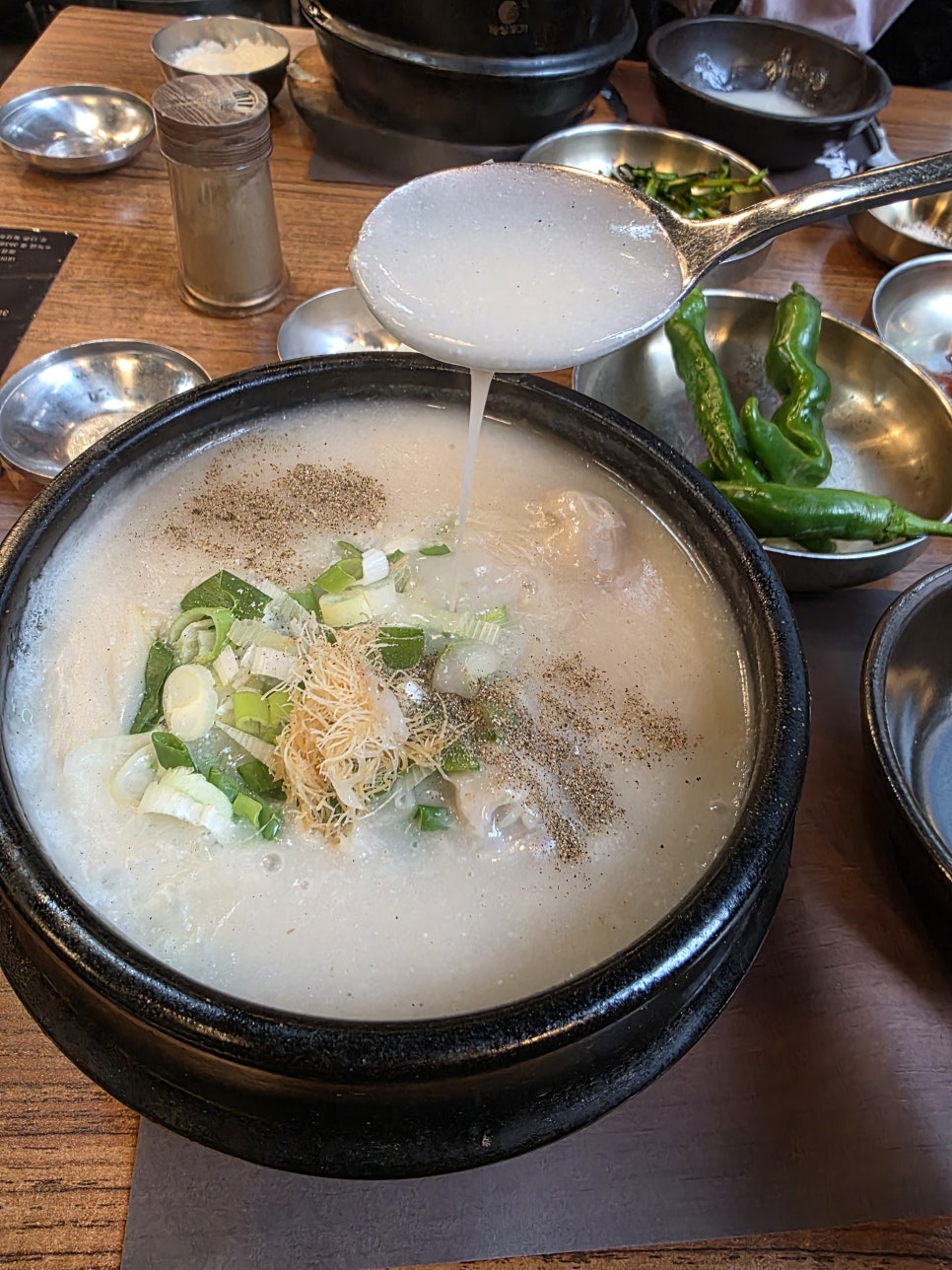
The banchan came in silver bowls: kkakdugi, a vinegar-chili dip, pickled cucumber and whole raw cheongyang chilies. Fewer places give you the whole chili these days. I cannot really eat them, but I like that they are there.
Soup arrives on a cart, several stone pots at once. Efficient, and slightly theatrical.
We ordered the pine nut samgyetang. The sign inside says it is the most ordered, and looking around, almost every table had it, especially the foreign guests. People call pine nuts the Korean truffle, and I wanted to know what that aroma would do to a chicken broth.
The stone pot holds a thick white soup with spring onion and a generous heap of ground pine nuts on top. The nut aroma hits first. The broth is unusually rich, the same dense impression I remembered from Hosu, and that was the moment I relaxed.
Salt and pepper are on the table so you season it yourself, in the soup or as a dip for the chicken. It reminded me of Pyongyang naengmyeon, where mustard, vinegar and salt are left to the eater. Samgyetang starts plain, so giving the seasoning this much room means everyone at the table ends up with a slightly different bowl. I went heavy on pepper in stages and barely touched the salt.
The glutinous rice comes separately rather than inside the bird, so you add as much as you want. I put some into the broth and let it soak up the chicken and pine nut, which was the best spoonful of the meal. A side plate for pulling the chicken apart appeared without our asking. For a fifty-year-old restaurant, the small comforts were all in place.
One more bowl at home
We could not finish. The portions are large. We asked at the counter and they packed the rest to take home. Reheated the next day, the broth was even thicker and, honestly, better. One bowl, two meals.
I’d recommend it to anyone in the Gangnam area who has been missing a proper thick-broth samgyetang, to couples who want a summer lunch that feels restorative, and to anyone hosting friends from abroad who want the one Korean dish everyone has heard of, done well. Go at opening or in the slow hour before dinner if you would rather not queue.
My rating: 5/5. Whenever I miss Hosu, this is where I am going.