Share Lounge, Ginza Six: a day pass for working in Tokyo
I did not know this on my first trips, but once you stay somewhere more than a few days, a particular kind of day arrives. Tokyo especially. The sightseeing is mostly done, and what you want is to rest a little while catching up on work, or to sit in a cafe with a book or a laptop for hours. On this stay I wanted to block out a few hours to study AI tools and write, and nowhere worked: the hotel room, other lounges, the cafes around Ginza.
The reasons were the usual ones. Every cafe was full and loud. A hotel room, unless it is a top-tier hotel, is not built for work; the bed is in your eyeline and your posture goes first. Coworking spaces charge a lot per day. And I did not want to do nothing, either. I wanted a little of the tension of working, somewhere between an office and a holiday.
The place I found was the Share Lounge on the sixth floor of Ginza Six, a members’ lounge run by Tsutaya Books. There are a few in Tokyo, and this one was near my hotel. My travel companion had flown home a day earlier, this trip had been mostly about sake bars, and I had already done the shops I cared about, which in Ginza means Onitsuka Tiger. So I went looking for somewhere to concentrate.
Before you go
| Item | Notes |
|---|---|
| Prices we saw | Day pass ¥5,500. Hourly: ¥1,650 for the first 60 minutes, then 30-minute extensions. Alcohol plans are separate. I arrived at 1pm and the day pass was clearly the better deal |
| Seats | Open tables, window seats, and semi-private booths with wooden panels and a 27-inch monitor. Book ahead or arrive at opening; by 2pm the booths were nearly full |
| Getting there | Ginza station exit A3, then two or three minutes along Chuo-dori. Ginza Six is the building with the vertical lattice facade; take the escalator to the sixth floor and walk through the bookshop to the back corner |
| Note | The free entry once offered through certain Hyundai Card tiers has ended. Staff mentioned it before I asked |
Through the bookshop
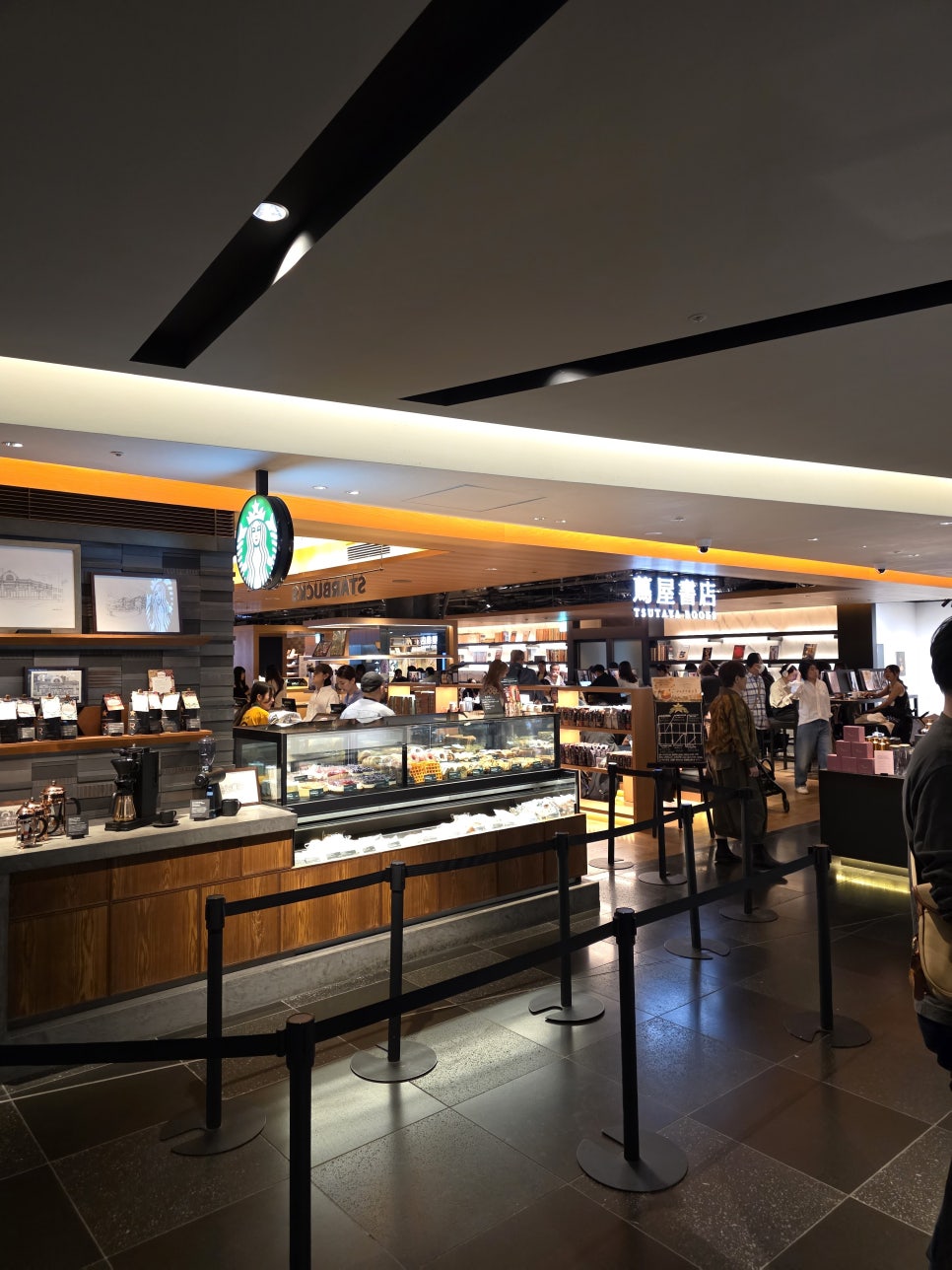
Ginza Six is worth a look on its own, with Tiffany, Celine and Balenciaga set into glass cubes at street level. On the sixth floor you step off the escalator into Ginza Tsutaya Books, with a Starbucks beside it. Before the lounge I walked the shop. It is not like a Korean bookshop: art, photography, architecture and Japanese culture arranged by theme on the tables, under a white curved atrium in the middle. The shop itself is a kind of gallery, and a lap of it resets your head before you sit down to work.
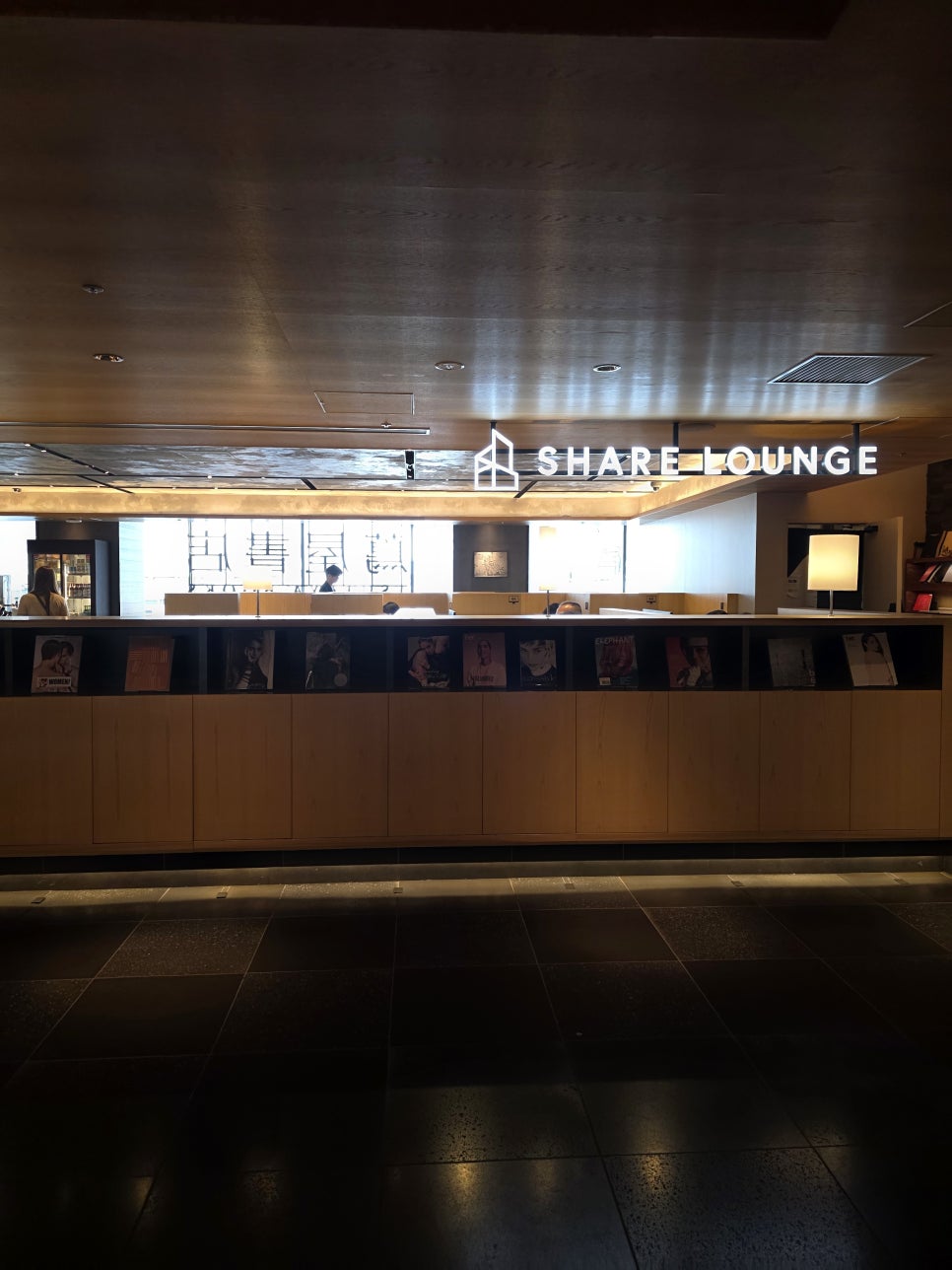
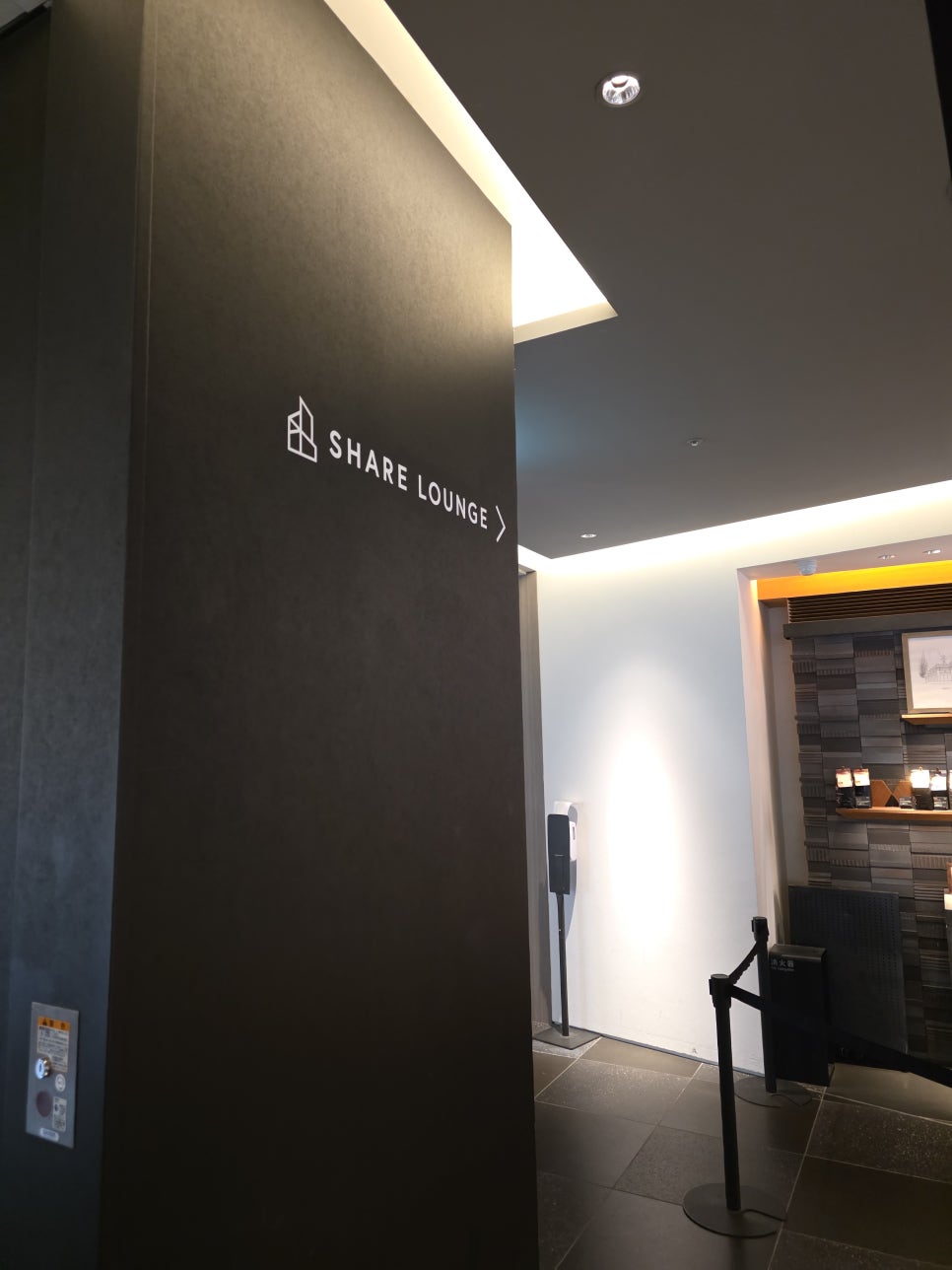
The lounge sign is a small wooden lightbox in a back corner of the shop, easy to walk past. Keep going between the tables toward the back and it appears, with the counter on the left and people at desks behind a wall.
The booth
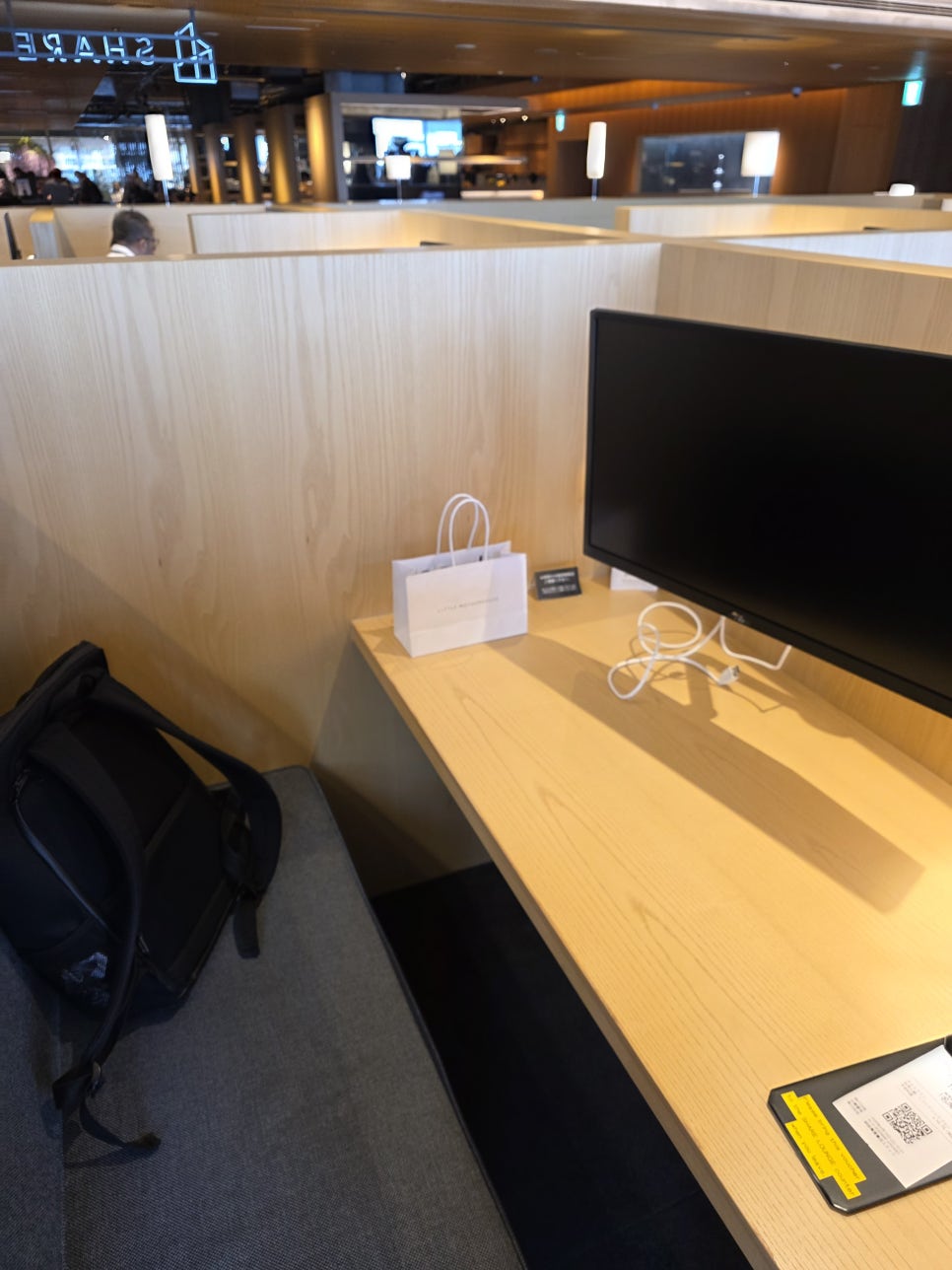
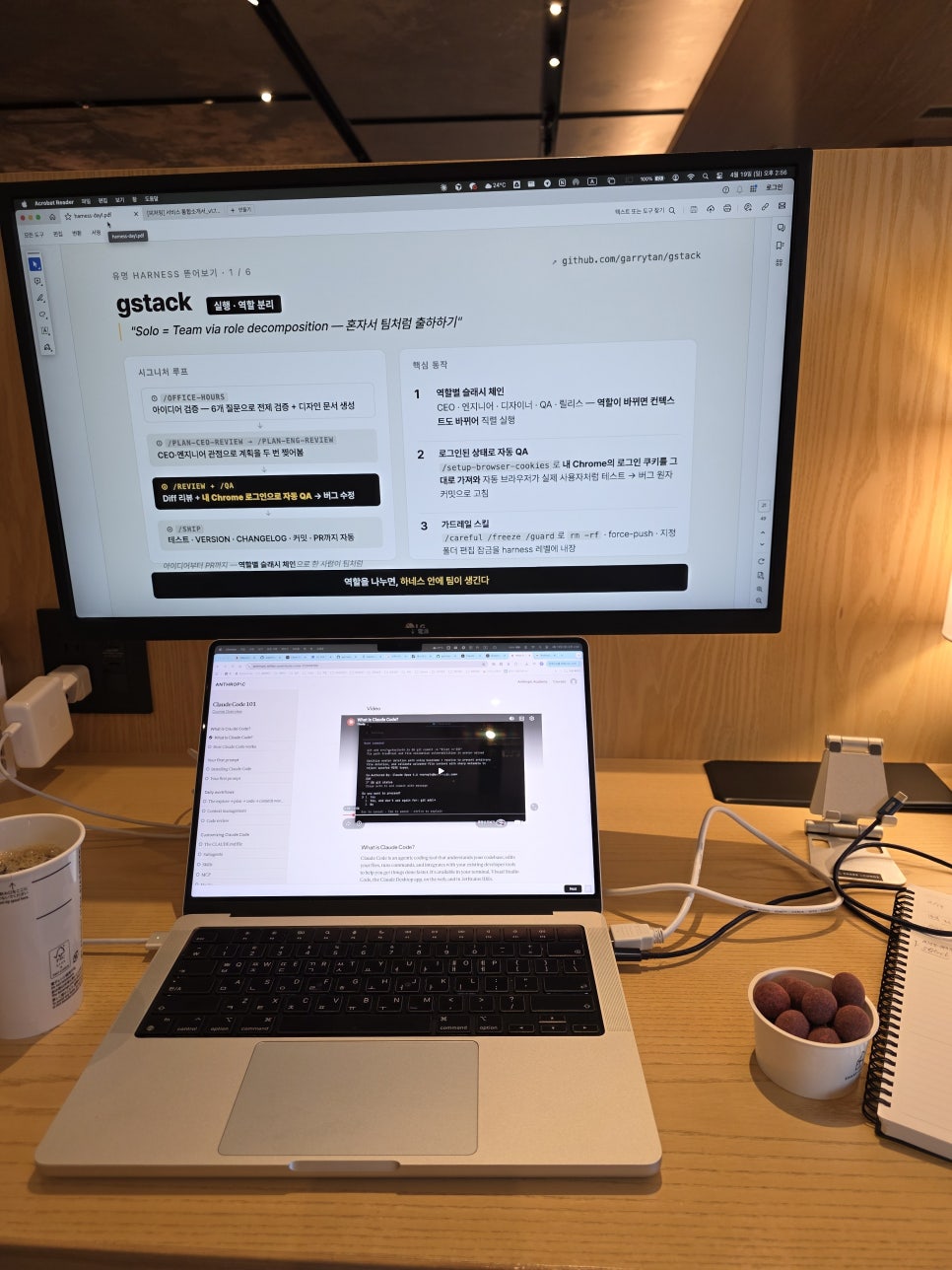
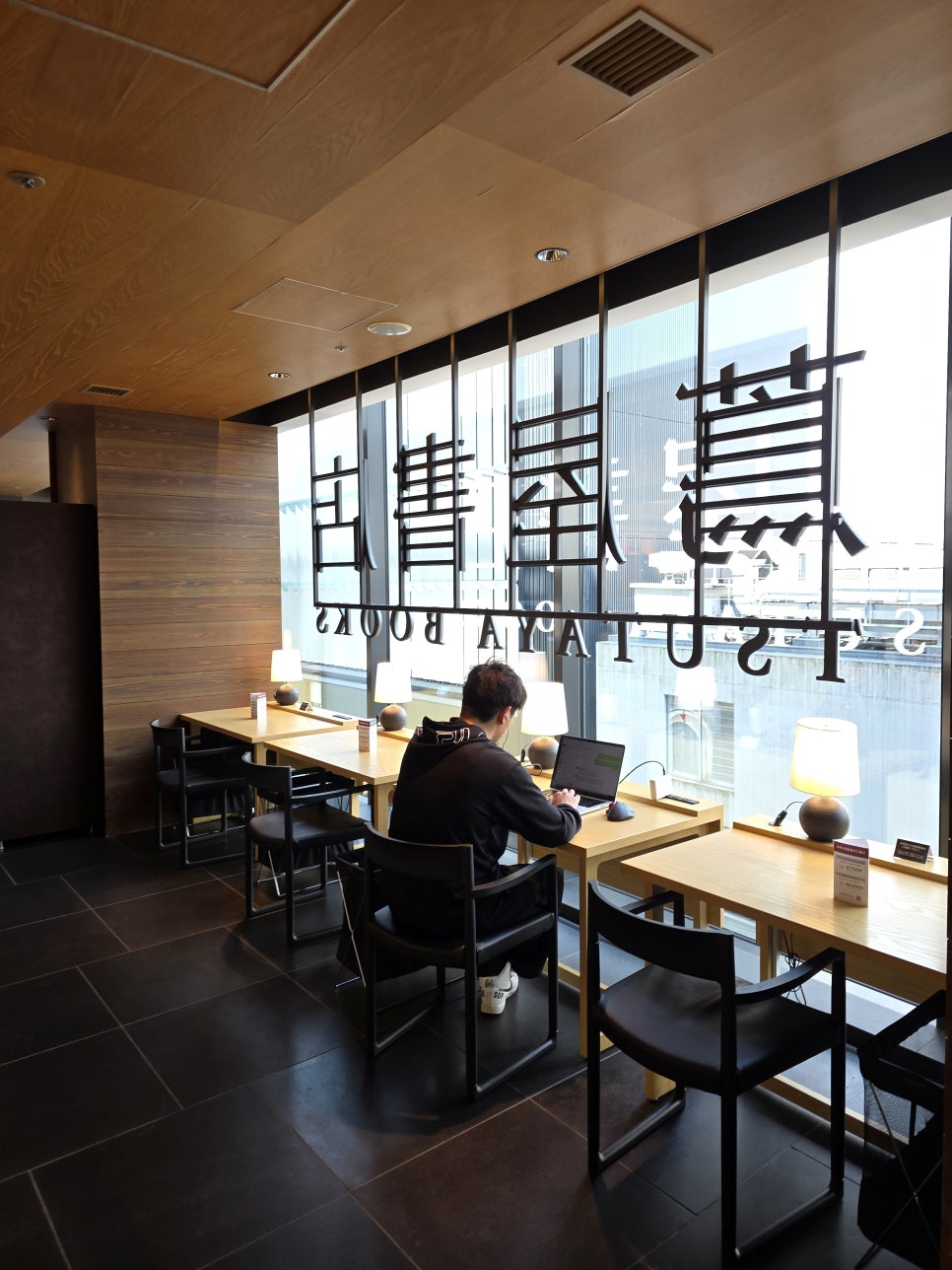
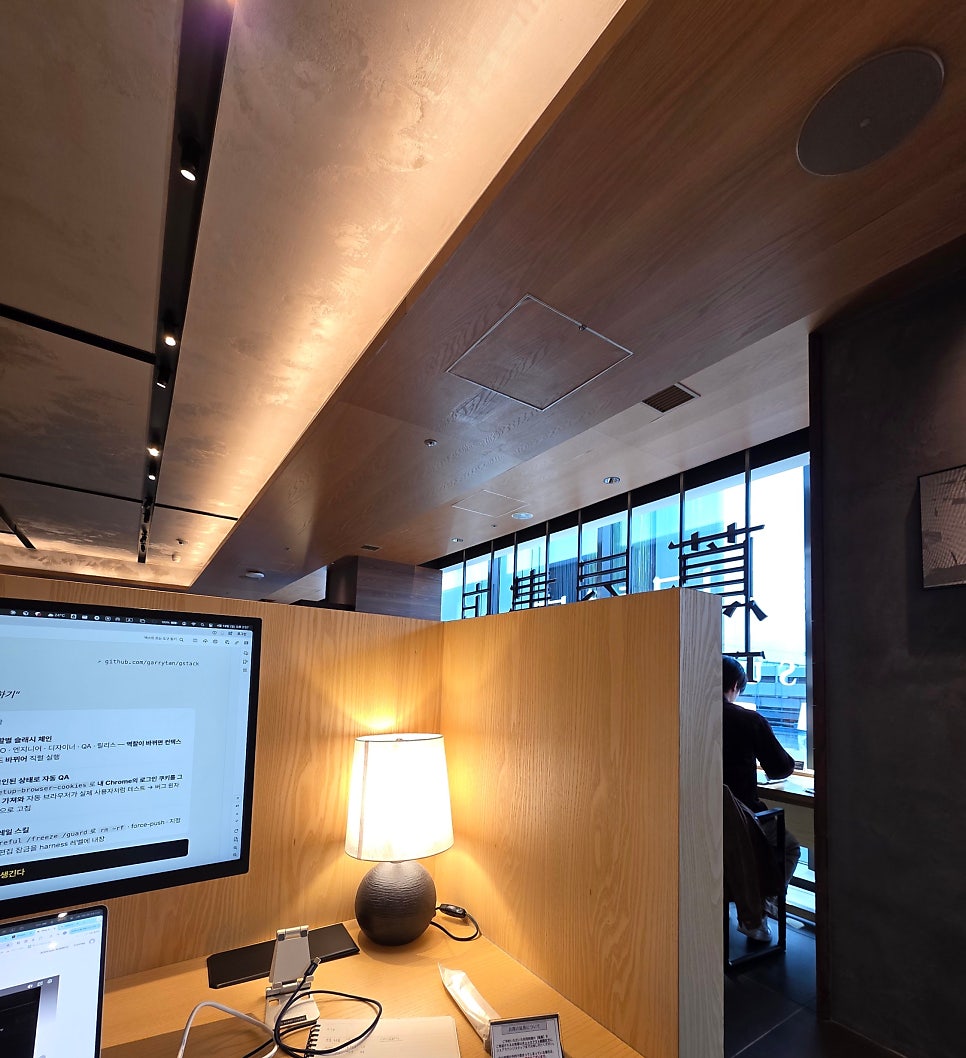
The lounge is smaller than I expected. Three kinds of seats: open tables like a cafe, good for a short meeting; window seats looking straight onto the Ginza boulevard; and semi-private booths, closed on one side by wood panels, laid out like library carrels for people who want to disappear for hours. I took a booth. Eight hours with eyes on me from every side was not the plan, and the booth was the best decision of the day.
Each booth has a 27-inch monitor and a long light-oak desk with its own lamp. The panels between booths stop most of the sight lines and sound. What I loved was the second screen: study material on one, a working window on the other, close to the setup I use at home. I had planned most of this Tokyo trip with Claude and had just started using Claude Code, and I wanted to use it properly. Two screens changes everything compared with a laptop in a cafe. The concentration of an office desk arrives on its own, and the flow of reading one thing and running another does not break. It was a working room, and so I worked. Far better than the hotel room.
In the middle of the space is a station with keyboards to borrow, including a Happy Hacking Keyboard with a touch-and-try sign, and monitors can be borrowed for the open seats too.
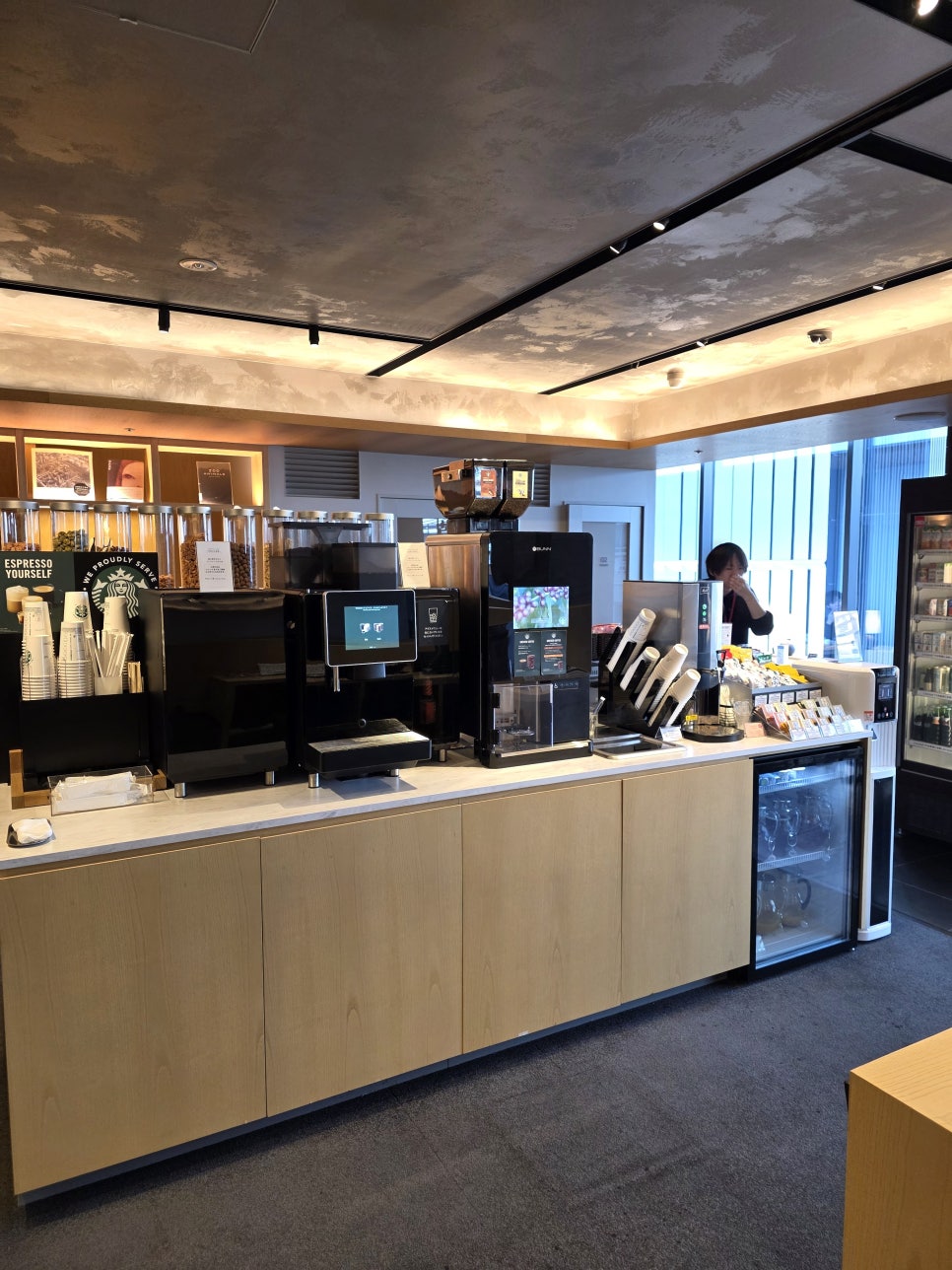
The drink and snack bar is unlimited for the length of your pass. Coffee from a press using Starbucks Reserve beans, a rack of Japanese green tea, hojicha and black tea, and next to it instant miso soup packets and a hot water dispenser. Everyone was making the soup, so I did too, and a cup of hot broth when hunger creeps in around late afternoon turned out to be exactly right. The fridge holds Perrier lime, water and soft drinks; there are hours when beer is free and evenings with highballs and wine, which I skipped because I was still working. The snack corner has a gumball-style machine that drops mixed nuts into a paper cup when you turn the handle, which everyone tried once, and a shelf of madeleines and biscuits that I raided whenever my focus dipped around three.
Halfway through I moved to a window seat for a while. Outside, the facade of the old department store fills the frame and people pass along Chuo-dori below it. There are cafes in Seongsu where an old factory facade hangs in the window like that; here it is a department store at Ginza scale. And for the record, the claim that Japan is analog and does not use AI is not true. Nearly every office worker in that room was in Claude Code.
When I got tired I went back into the shop, where an exhibition of seashells glazed like ceramics was on that day. Thirty minutes of work, five minutes among the books, and eight hours passed more easily than I expected.
The room was people in their twenties and thirties on laptops, two men in suits having a meeting, a tourist with a stack of books, couples, people alone. Different from a Korean library cafe: everyone had a clear purpose, talkers took the open area, the quiet ones drifted to booths and windows, and nobody had to mind anyone else.
After six the lights dimmed and the room felt more like a hotel lounge, with only the booth lamps left as the windows darkened. That was the best hour of the day. Yesterday’s sightseeing done, today’s work mostly finished, a few books to leaf through. Getting that feeling on the sixth floor in the middle of Tokyo is the real value of the ¥5,500.
I stayed until closing at nine. It was the first time on the trip that I had spent eight hours in one place comfortably. The more familiar Tokyo becomes, the less I want a route of sights and the more I want rooms like this, kissaten and bookshops, where I can keep my own pace.
I’d recommend it to anyone on a second or third Tokyo trip who has done Ginza, to anyone staying a few days on a workcation or business trip who needs to open a laptop every day, to solo travelers who want to sit and think and cannot do it in a cafe or a hotel room, and to developers and designers who need a proper desk and monitor in the city. Book the booth in peak season and at weekends, and do not come for the free snacks. Next time I want to try the Marunouchi branch by Tokyo Station, which looked even better in photos; I nearly moved this time, but I was working well and did not want to gamble on a full house.
My rating: 5/5. Whenever I need a desk in a foreign city, this will be the first place I think of.