Bobo Sikdang, Apgujeong: modern Chinese for the important dinner
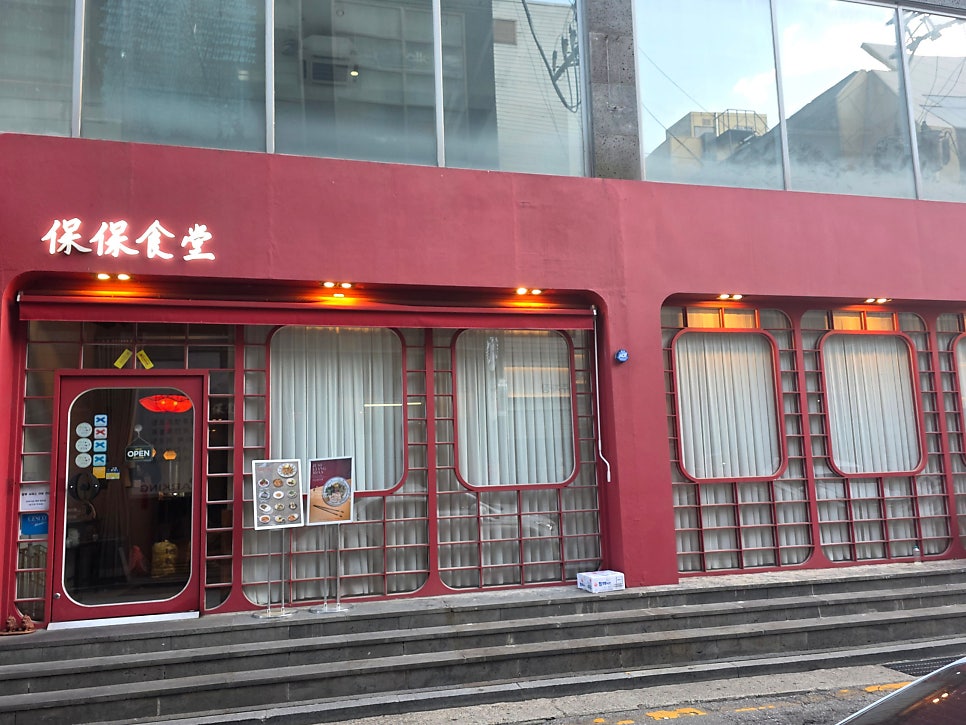
Apgujeong is a strange neighborhood. It carries an image: old money, and alongside Cheongdam the place where only the good things are. So when you suggest meeting someone important in Apgujeong, it reads as a gesture of respect. That also means expensive restaurants, and my wallet is not bottomless. A good place, but not one hundred thousand won a head.
You know the dilemma. Around Dosan Park there are bistros and wine bars that show up on Instagram all the time, there is Korean fine dining in Cheongdam, and there are so many options that choosing becomes the hard part. The occasion cannot feel light, and a full course dinner with all its formality would be too much.
Before you go
| Item | Notes |
|---|---|
| Booking | Catchtable, and book. On a Friday or weekend without a reservation you may wait; the night we went it was full |
| Rooms | Private rooms for six or more, with a minimum spend, so ask when you book |
| Getting there | One block behind Apgujeong Rodeo and Dosan Park, a quiet street off the main road |
| Korean name | 보보식당 압구정 |
Not the red-lantern kind of Chinese
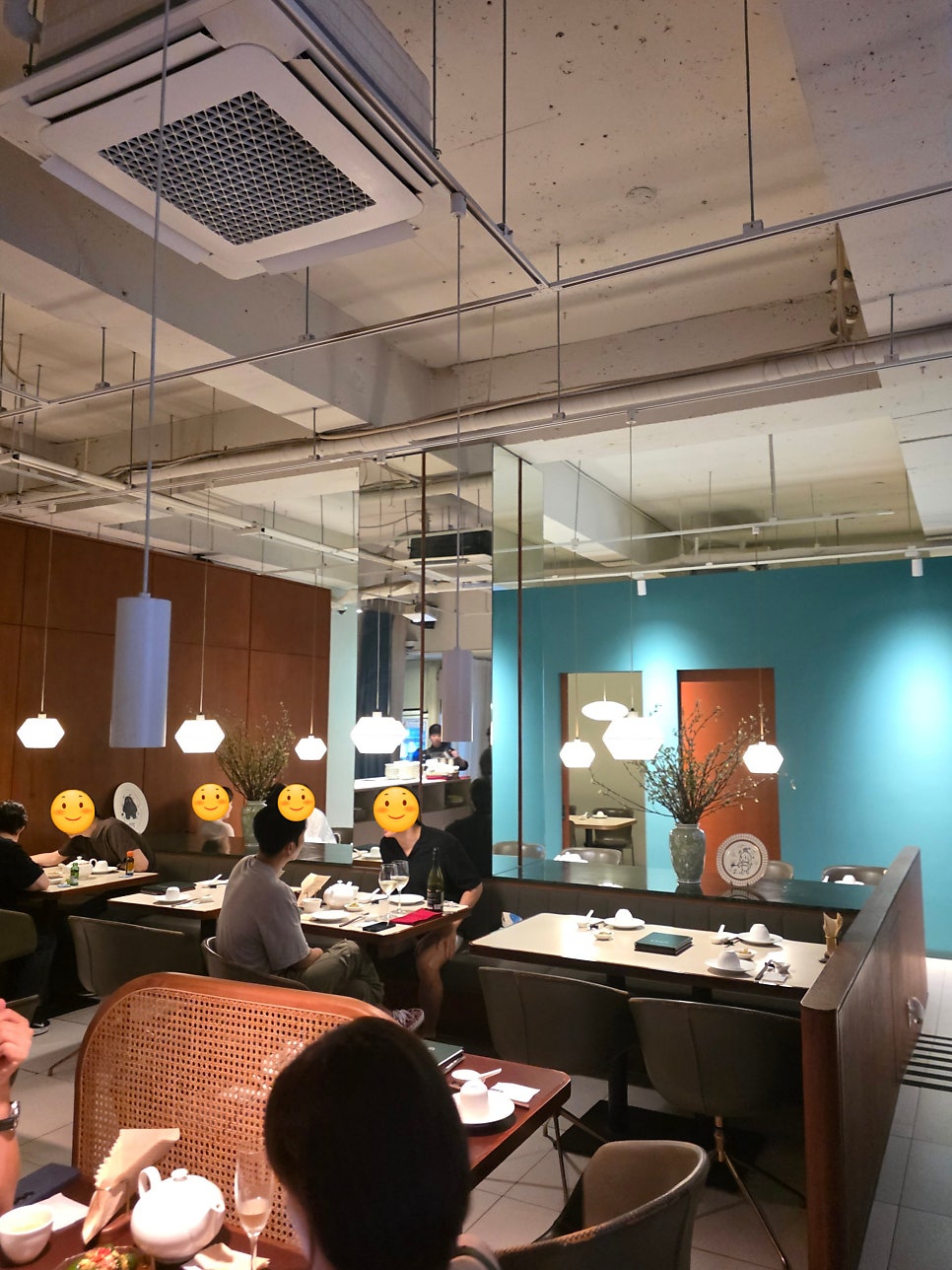
Bobo Sikdang does modern Chinese. It started in Gwangju in 2016, moved its main branch to Apgujeong, and word of mouth has since made it a fixture of Chinese dining here. There is a branch in Gwanghwamun as well, and the main branch runs private rooms.
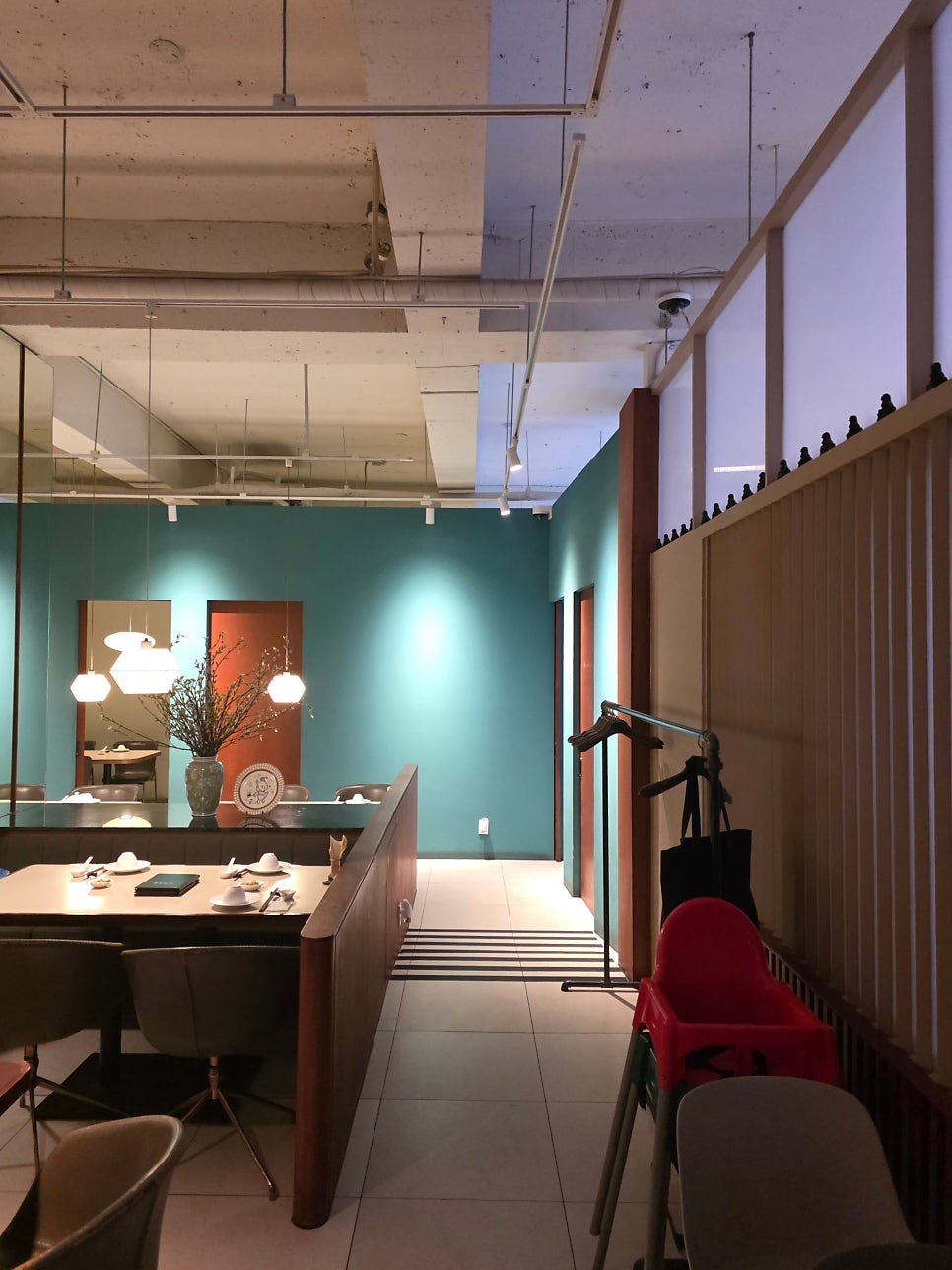
Inside, the mood is not what you expect. No red lanterns, no noise. This is industrial: exposed pipes across the ceiling, paper lanterns hanging in rows, wooden furniture, closer to the modern dining rooms Koreans like. The ceiling height settles the room. The private rooms are different again, mint green walls with orange-toned wallpaper, and a red-painted child’s chair set against a wall as an object, Eastern detail handled in a modern way. Book it for an important dinner and the room itself raises the occasion a notch.
The first thing you notice at the table is a brass lantern, not loud but giving the space its weight. Pendant paper lanterns pour soft light from above and wall lamps warm it from the side. The three of us said the same thing within a minute of sitting down: this room is good. A restaurant is mostly judged in the first sixty seconds after you sit, and Bobo wins that minute.
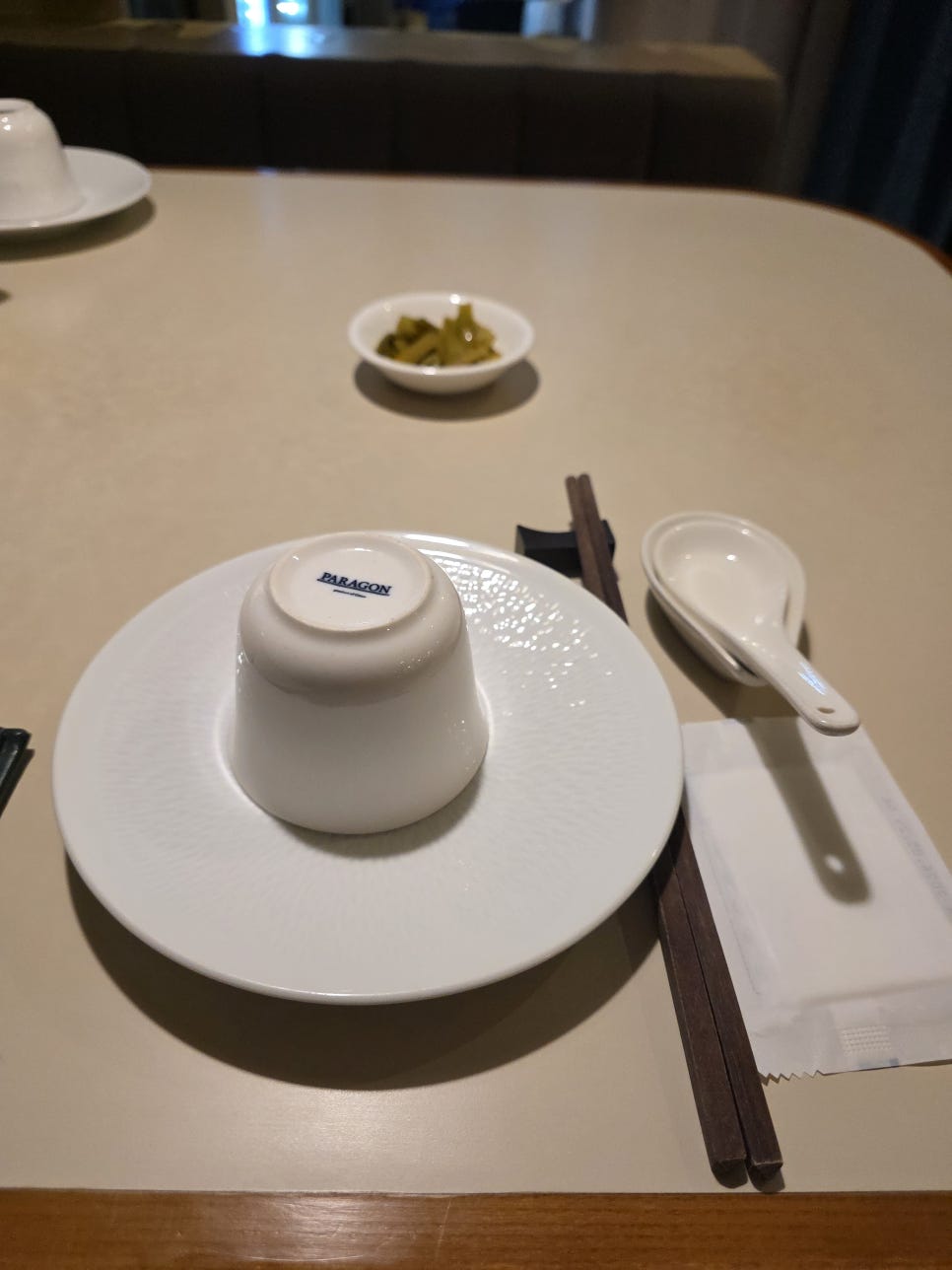
Tea arrives as standard, in Paragon cups, English bone china, which weighs differently in the hand. A small detail with an outsized effect. Big white plates and ceramic spoons complete a tidy modern setting. The friend I had brought cares a great deal about food, rooms and details, and he said at once that I had chosen well.
Lion’s head, mala eggplant, a highball
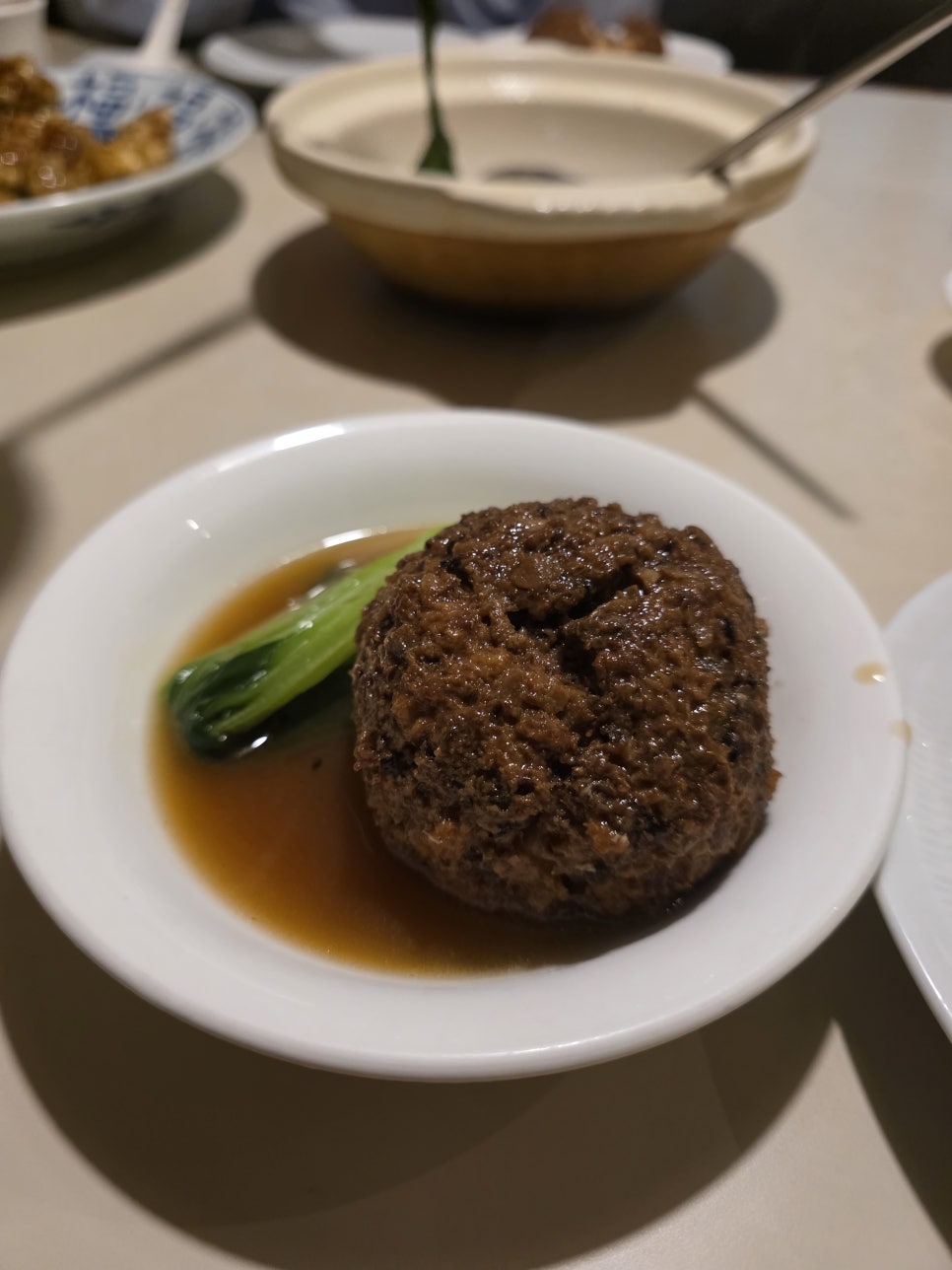
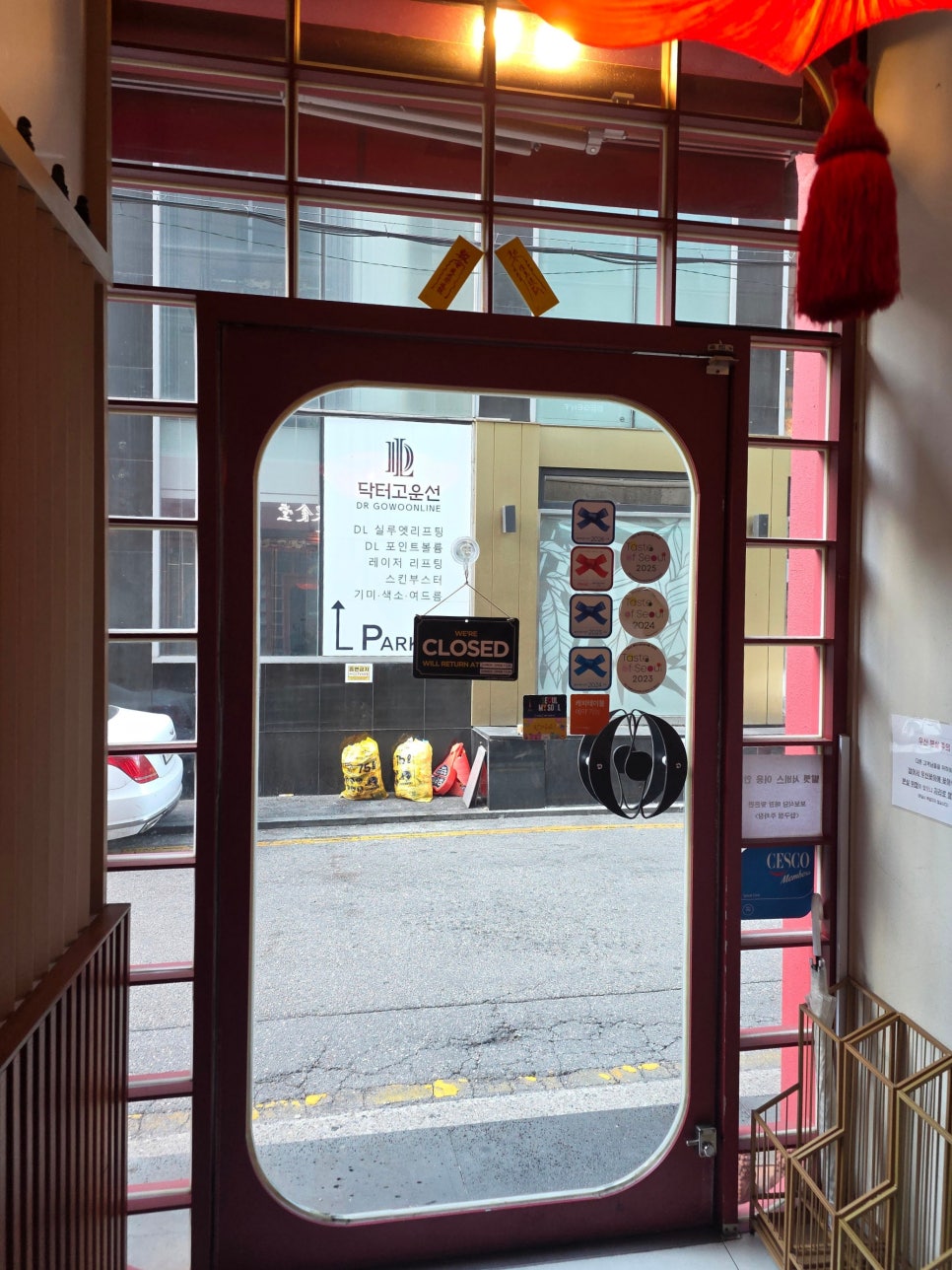
I am still an amateur at this and keep forgetting to photograph dishes before they are shared, so forgive the photos.
The main was the lion’s head meatballs, shizitou, a Yangzhou classic named for the greens draped over the big meatball like a mane. It is Bobo’s signature and skipping it would have been a mistake. Sunk in a dark brown gravy, the meatball is unexpectedly soft; I had expected a dense mass of minced meat, and it loosened in the mouth instead. The gravy is rich on the first bite and settles into balance with a leaf of bok choy. My friend hesitated over an unfamiliar order and was satisfied the moment he tasted it. I first had this dish at Junghwabokchun in Yeonnam-dong, and a friend who studied in China told me lion’s head is what you serve when you really want to honour a guest. Telling that story to two people who had never met loosened the table by a degree.
We also had the butter sweet-and-sour pork and the mala fried eggplant, both house signatures, though I have no photos. The butter pork is reliably excellent and needs no defence. The eggplant, thinly battered so the flesh stays soft, with a spicy numbing dressing on top, woke the palate up between bites of the mild meatball. Lion’s head plus mala eggplant is the pair to order.
Drinks were a highball and a sparkling lemon. A highball cuts the oil of Chinese food better than anything, and there were two bases, baijiu and whisky; I took the whisky.
What the room did
We sat for nearly two hours. The two friends were meeting for the first time, and about thirty minutes in they were deep in each other’s businesses, trading contacts and industry news without any prompting from me. That is the entire point of an introduction dinner. The tables are far enough apart that the neighbors’ conversation barely reaches you, which turns a meal into a dinner rather than a company outing. Not heavy, not dark, easy on the eyes, and the food was excellent. Three people across a table, exactly right.
On the way out I noticed the chef, Jang Bo-won, had appeared on Culinary Class Wars under the nickname Samdaega Sikdang, going out at the first round after a long deliberation. I had not known, and the cooking made the case on its own.
Bobo belongs firmly on the list for any important dinner in Apgujeong. The room is modern-dining grade without the formality, the spacing is proper, and two dishes are enough to carry an evening. One caveat: it is a la carte, so a small party cannot order widely. That is not a flaw of the restaurant. Bring more people and order more. Two dishes and a light side suits two or three; for the full spread, book a room and gather six.
I’d recommend it to anyone introducing a friend or hosting a business dinner around Apgujeong, Sinsa or Dosan Park, to people taking their parents to modern Chinese without ceremony, to couples on a weekday dinner, and to anyone working through Catchtable’s new openings. Next time I am booking the room for six and going slowly through the menu in that mint and orange light.
My rating: 5/5. Every restaurant lately gets five from me, and I may have to rethink the scale.